

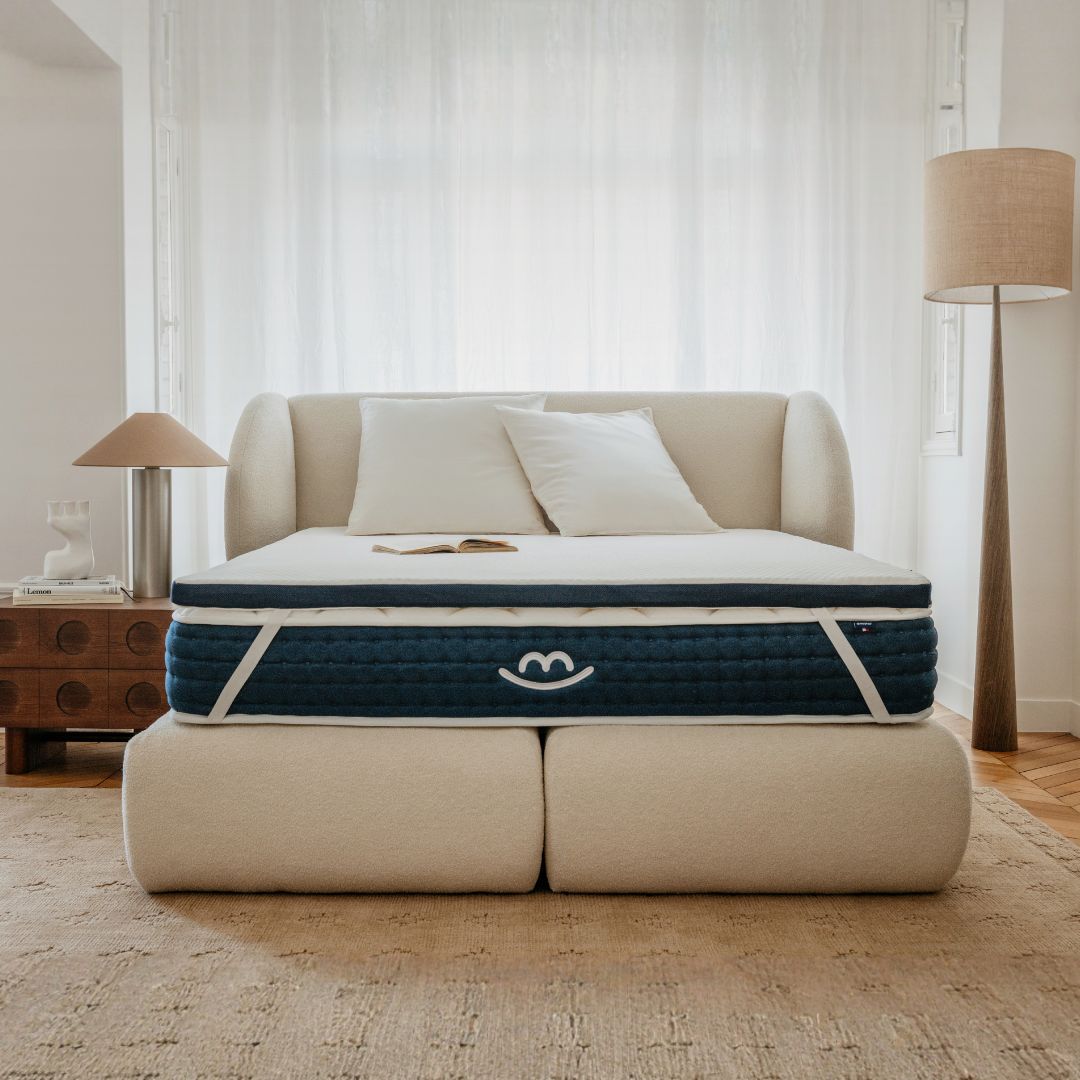

Are you hesitating between latex and foam for your future mattress? We understand why; on paper, everyone promises "the best sleep."
But with one mattress that cradles you, another that bounces, another that keeps you warm, and one that "moves" every time your partner turns over, it's easy to make a mistake.
In this article, we'll compare the different types of mattresses: latex, foam, spring, and hybrid, in a simple and practical way. This means: the feel, pressure points, motion isolation, air circulation, spinal support, and durability (up to 15 years depending on materials and ranges).
Let's put an end to the doubt: foam or latex, which one will truly suit you?
To go further, consult our expert selection: Top 10 Best Mattresses 2026.
In summary
- To choose between latex or foam for a mattress: the #1 priority is your profile (warmth, pressure points, mobility, sleeping with a partner). The material alone is not enough; it's the balance of comfort and support that counts.
- Latex: more breathable and responsive (recovers its shape quickly), ideal if you get hot at night and/or move a lot. Be mindful of the firmer feel and the composition (natural vs. synthetic latex).
- Foam: HR (high resilience) offers excellent value for money if the density is right, but can sag over time. Memory foam greatly reduces pressure points and improves motion isolation.
- If you're hesitating: the most versatile option is often the hybrid (springs + comfort layers) to combine ventilation, support, comfort, and motion isolation.
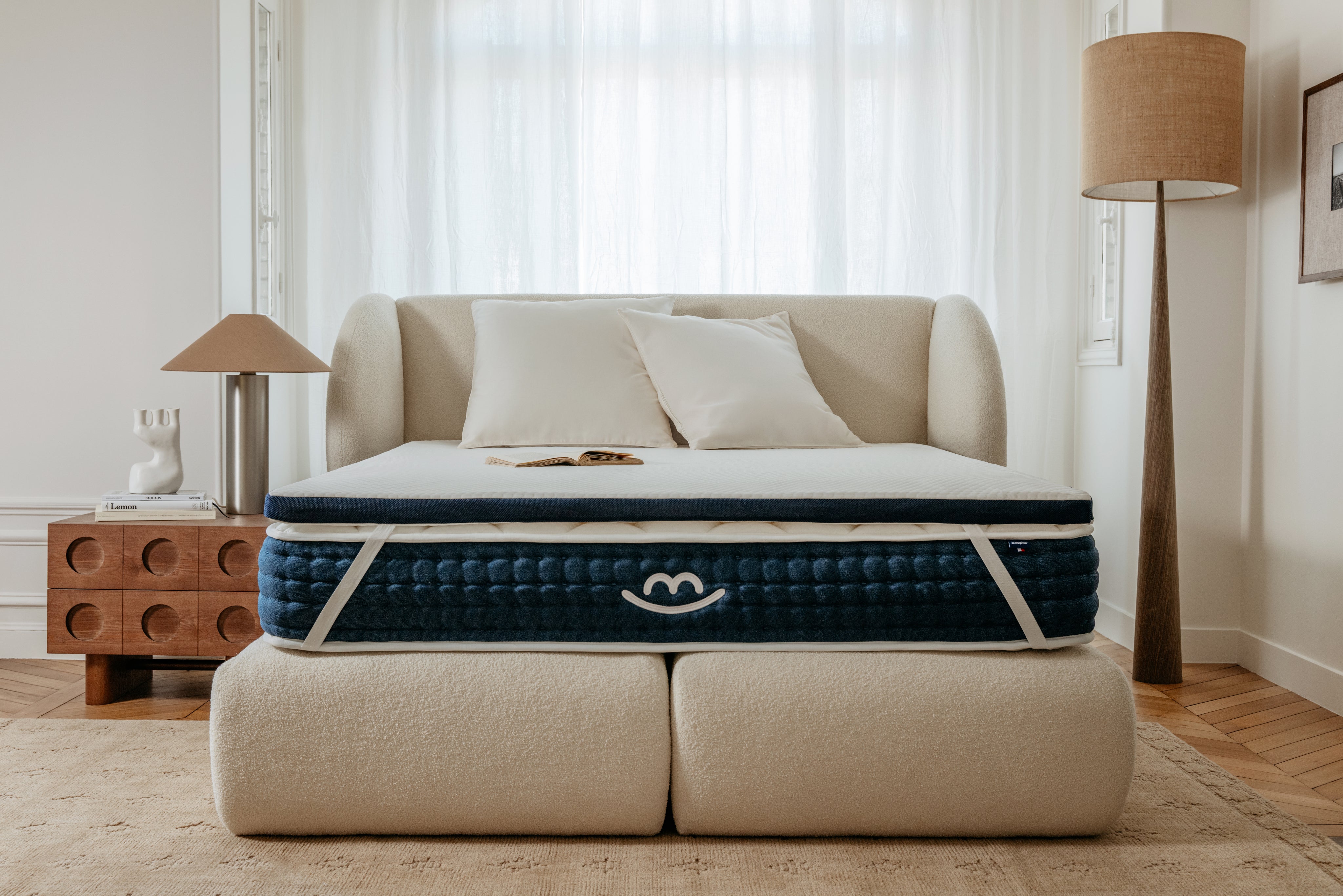
Latex, foam, springs: what are we really talking about?
When comparing a latex or foam mattress, we often mix several things. In reality, a mattress generally combines:
- a comfort material: what you feel first, called the surface feel, or the "accueil" (plush/firm)
- a support part: what stabilizes and supports the back.
Among the types of mattresses available on the market, we find:
- polyurethane foam mattresses, often called HR (high resilience) foam when the quality is high.
- memory foam mattresses (or viscoelastic foam), which conform to the body's contours and give that enveloping sensation.
- latex (natural or synthetic latex mattresses)
- spring mattresses (often pocket springs)
- hybrid mattresses: a combination of springs and layers of foam (or latex)
So a foam mattress can refer to several types of foam. And that's exactly why the foam or latex comparison deserves to be nuanced and explored in depth.
Latex vs. foam: comparative table of mattress types
| Critère | Latex | Mousse (polyuréthane/HR) | Mousse à mémoire (viscoélastique) |
|---|---|---|---|
| Sensation | Tonique, élastique, rebond | Variable, de ferme stable à souple | Enveloppant, effet cocon |
| Réactivité | Très rapide, reprend sa forme vite | Rapide à moyenne | Plus lente (empreinte puis reprise) |
| Gestion des points de pression | Bonne si accueil adapté (zone, souplesse) | Variable, dépend de l’accueil | Très bonne : épouse les formes du corps, réduit les points de pression |
| Indépendance de couchage | Bonne à très bonne selon conception | Bonne si mousse de qualité | Très bonne, amortit les mouvements, réduit la propagation des mouvements. |
| Durabilité | Souvent bonne (selon qualité) | Très variable : densité/qualité déterminantes | Variable (selon densité/qualité) |
| Thermosensibilité | Faible, bien ventilé | Variable selon structure | Peut réagir à la chaleur (thermosensible) |
| Circulation de l’air | Souvent bonne (structure alvéolée) | Variable selon la structure + housse | Variable (dépend de la conception) |
| Pour qui ? | Ceux qui veulent soutien dynamique + ventilation | Budget maîtrisé / confort polyvalent | Dormeurs sensibles, recherche d’accueil moelleux |
The advantages and disadvantages of a latex mattress
Advantages of latex
1) Good air circulation
Latex is often appreciated for its air circulation and breathability (useful if you tend to get hot at night).
2) Less conducive to dust mites
Latex is often recommended for sensitive people, as it offers an environment that is less conducive to dust mites, while remaining well-ventilated thanks to its cellular structure.
Also discover our collection of anti-dust mite and hypoallergenic mattresses.
3) Dynamic support
Latex provides elasticity that supports without "blocking". This is a strong point for those who want support while maintaining a feeling of freedom.
Disadvantages of latex
1) A firmer feel (not always liked)
If you are looking for a very enveloping feel (cocoon type), latex may seem a little "too bouncy".
2) Natural latex vs synthetic latex: pay attention to the composition
A synthetic latex mattress can be comfortable, but the feel, breathability and durability can vary depending on the formula. The right thing to do: read the technical sheet (composition + density + layer thickness), instead of stopping at "latex".
The advantages and disadvantages of a foam mattress
Advantages of polyurethane foam (including HR)
1) Good value for money (if the foam is serious)
Polyurethane foam can offer excellent value for money when the density and design are right. They are among the cheapest mattresses on the market, but be careful about the quality.
2) Versatility
Depending on the firmness level and thickness, a foam mattress suits many profiles (a fairly balanced sleeping surface, without too many demands).
Disadvantages of foam
1) Risk of sagging and hollows
Foam mattresses can sag and create a hollow area, which can impact sleep and promote pain (hips/back/shoulders).
2) Uneven ventilation
Air circulation depends greatly on the structure, perforations, cover, and bed base.
Advantages of memory foam (viscoelastic foam)
1) A feel that adapts to body shape
Memory foam conforms to the body's shape and helps reduce pressure points (shoulders, hips). Memory foam comes from a viscoelastic and thermosensitive foam that softens on contact with body heat and readjusts when you move.
2) Very good sleeping independence
The "damping" effect limits the transmission of movements, which is precious and appreciated when sleeping with a partner.
Disadvantages of memory foam
1) Warmer sensation
As viscoelastic is thermosensitive, it can accentuate a sensation of warmth in some sleepers, especially if the mattress is poorly ventilated.
2) Slower reactivity
Some people love the enveloping feel; others don't like feeling an imprint that takes a little longer to disappear.
Boxed text – “I like memory foam but I get hot at night”
Aim for a better ventilated design: a hybrid mattress, a breathable mattress topper, a slatted bed base, etc.
How to choose between latex or foam for a mattress?
To help you decide, here is a simple guide based on the points discussed:
Choose latex if…
- you get hot at night and want better air circulation,
- you are sensitive and have allergies,
- you like firm, dynamic support.
Choose HR foam if…
- you want good value for money,
- you are looking for a balanced sleeping surface,
- you check the density (Morphea benchmarks: ≥ 35 kg/m³ for daily use).
Choose memory foam if…
- you are looking for the cocoon effect,
- you want to reduce pressure points,
- you sleep with a partner and sleeping independence is a priority,
If you are still unsure, the Morphea guide "how to choose your mattress" will guide you step by step according to your body type, sleeping position and comfort expectations.
Conclusion
To decide between latex or foam for a mattress, the clearest method is:
- Compare the characteristics (warmth, responsiveness, independence, pressure points)
- Then choose according to your profile (position, couple, thermal sensitivity, comfort expectations)
FAQ
Which mattress to choose: foam or latex?
The right choice of mattress depends mainly on your comfort preferences, your sensitivity to heat, and your need for sleep independence.
Memory foam is particularly interesting for its enveloping comfort and pressure point reduction, but it is often less breathable, which can be important if you tend to get hot at night.
Latex, which is more responsive, is often better suited for people who move a lot and are looking for a more dynamic feel, provided they choose an appropriate composition and construction.
What are the differences between foam and latex?
The most striking difference concerns responsiveness and feel. Latex is more elastic and quickly regains its shape, which facilitates changes in position. Memory foam, on the other hand, is viscoelastic and thermosensitive: it softens upon contact with heat and conforms to the body's shape, which often improves comfort at pressure points but can also reduce the feeling of coolness.
What are the disadvantages of latex mattresses?
Latex is often more tonic and “dynamic,” which may not appeal to you if you're looking for a very enveloping, cocoon-like effect.
Secondly, the composition can vary greatly (natural latex, blend, synthetic latex), and this can influence the feel and breathability, so it's important to read the technical sheet carefully.
Finally, for comparable quality, latex can be more expensive than standard foam.
What are the disadvantages of a foam mattress?
For polyurethane/HR foam, the most common drawback is the risk of sagging and hollows developing over time if the support settles. This can impact alignment and comfort.
Memory foam is less breathable due to more difficult layer ventilation. It is also thermosensitive: the feel can vary depending on the room temperature (firmer when cold, softer when warm).
Are latex mattresses good for back pain?
If you suffer from back pain, you should choose a mattress with progressive support to keep your spine properly aligned. In practice, studies mainly highlight the benefits of medium firmness rather than a specific material.
The Morphea Jade premium hybrid mattress is presented by L'Express as the “best mattress for back pain” in its comparison guide.
Our latest articles to discover
Best hybrid mattress: selection and comparison 2026 – Morphea

Memory Foam Mattress Topper: The Best Mattress Topper for Back Pain
A memory foam mattress topper is a simple and effective solution for relieving back pain. Thanks to its ability to conform to the body's curves, it perfectly aligns the spine, reduces pressure points, and improves nighttime comfort.
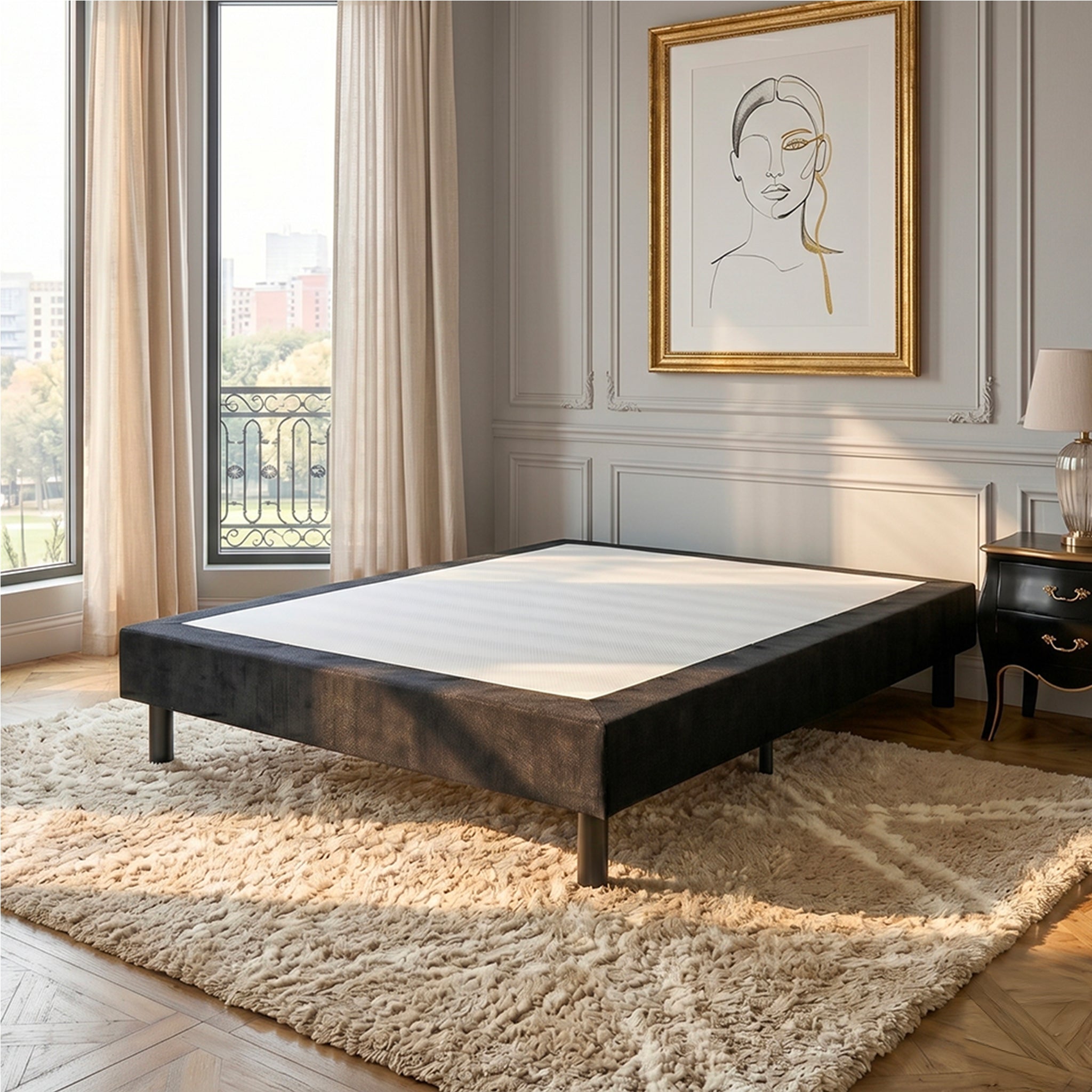
Which bed base to choose for a good night's sleep?
