

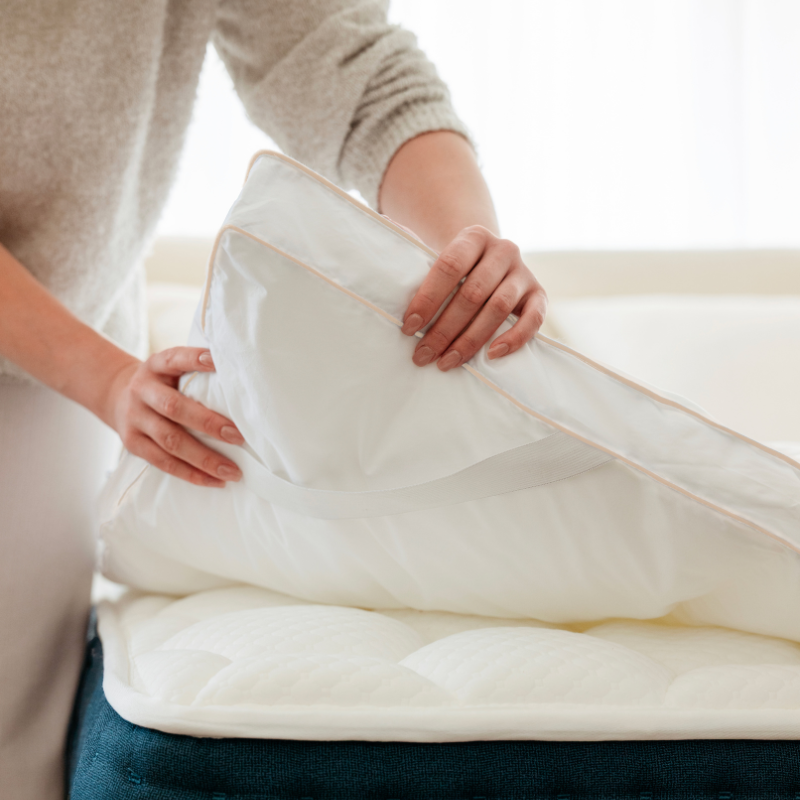
Clean, well-maintained bed linens not only look good, they also contribute to better sleep. Dust, perspiration, and body oils accumulate over time, affecting comfort and hygiene. Properly caring for your sheets, duvet, and pillows helps keep them fresh, extend their lifespan, and preserve the comfort of your mattress. This guide explains practical methods for caring for your bedding while keeping it fresh and long-lasting.
Wash sheets and pillowcases regularly
Sheets and pillowcases are in direct contact with the skin and accumulate sweat, oils, and dust. Regular washing is essential.
- Frequency: Wash them every 1 to 2 weeks to maintain cleanliness.
- Temperature: Use lukewarm water for cotton or linen; check instructions for delicate fabrics.
- Detergent: Choose a mild, fragrance-free detergent to reduce irritation and preserve fabric quality.
- Drying: Air dry when possible; tumble dry on low heat to avoid shrinkage.
Regular washing prevents bacteria build-up and keeps your bedding soft and comfortable.

Caring for your duvet and comforter
Duvets and comforters require special attention to maintain their loft and comfort.
- Local cleaning: Treat stains immediately with a mild detergent.
- Washing: Follow the manufacturer's instructions; most can be washed on a delicate cycle.
- Aeration and inflation: Shake and inflate regularly to distribute the filling evenly.
- Protection: Use a duvet cover to protect against dust, sweat and spills.
Proper care will keep your duvet soft, hygienic and comfortable for many years.
Maintaining pillows and mattress protectors
Pillows and mattress protectors are essential for hygiene and comfort.
- Pillows: Wash or replace them depending on their material, generally every 6 to 12 months. Memory foam pillows should be spot cleaned and aired regularly.
- Mattress protectors: Wash them monthly to control dust mites and allergens.
- Ventilation: Occasionally airing pillows and mattresses reduces humidity and prevents unpleasant odors.
These habits extend the life of your bedding and prevent unpleasant odors.
Alternate and refresh your bedding
Rotating your bedding regularly prevents uneven wear and maintains comfort.
- Rotate Sheets: Alternate sets weekly to reduce friction and pilling.
- Seasonal adjustment: Swap heavy duvets for lighter versions in summer.
- Exposure to the sun: Airing the bedding in the sun eliminates bacteria and humidity.
These simple steps will keep your bedding fresh, comfortable and durable.
Conclusion
Maintaining your bedding is essential for a comfortable and hygienic sleeping environment. By regularly washing your sheets, taking care of your duvet, and refreshing your pillows and mattress protectors, you extend the life of your bedding and maintain its softness.
At Morphea , our bedding is designed to combine durability, comfort, and premium quality. When combined with proper care, you'll enjoy long-lasting freshness and consistently restful sleep. Explore the Morphea collection to find bedding that combines luxury and freshness, night after night.




Top 10 Best Mattresses of 2026: The Experts' Selection
Morphea's Guide to Choosing Bedding to Complement Your Mattress