



A blood stain on the mattress is the kind of unexpected event we'd all rather avoid! But don't panic. With the right techniques and, above all, the right products, it's possible to remove it without damaging your mattress.
In this article, we explain what to do right away, then our 10 effective methods to remove this stain, whether it is fresh or older.
Enjoy clean bedding… and peaceful nights.
Read next: “Disinfecting a mattress: the guide to a clean, healthy and odor-free mattress” .
Preventing stains : a mattress protector, a fitted sheet or a washable cover prevents the stain from reaching the mattress… and simplifies daily life.
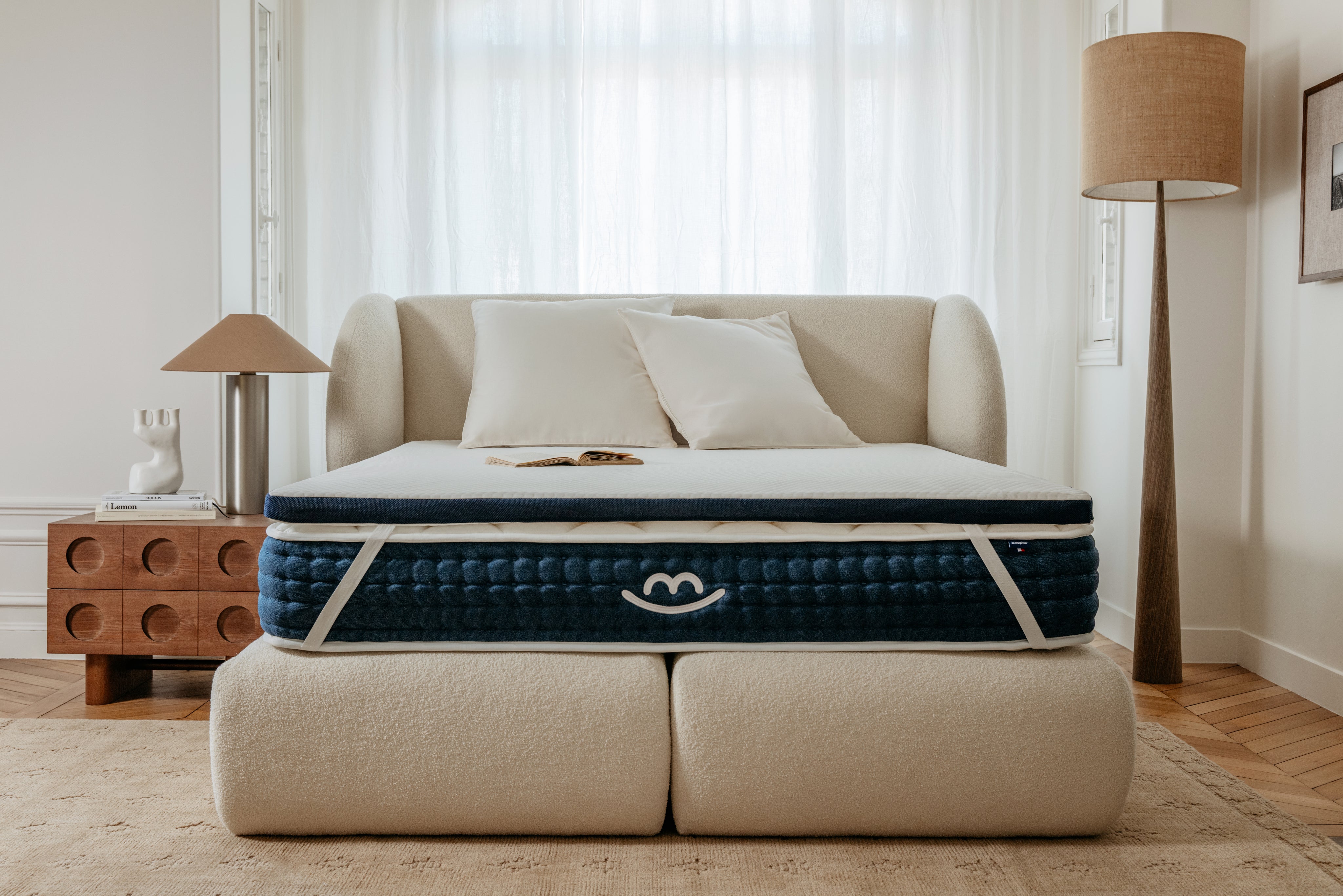
A blood stain on the mattress unfortunately happens… but it can be fixed, provided it is treated immediately!
In the first few minutes, the blood remains on the surface: it is removed mainly by absorption (absorbent paper) and by dabbing with cold water .
The problems begin when the blood dries. The stain darkens, clings more tightly to the fibers, and becomes harder to remove: you end up rubbing it in too much, adding too much water, and creating rings. It's precisely to avoid this vicious cycle that you need to act quickly: less rubbing, less moisture, therefore a cleaner result.
Very important: Never put hot water on a blood stain, it has the opposite effect: the heat cooks the stain and makes it even harder to remove.
A useful little nuance: if the dried blood is quite old, lukewarm water can help to soften it a little before treatment, but never hot, and always in small quantities.
⚠️Safety : Never use bleach on your mattress; it irritates the skin. The Ministry of Health also reminds users to avoid mixing products (e.g., bleach + vinegar) due to the potential for irritating/toxic gases. Source: Sante.gouv.fr
This is the basic first step to start cleaning a blood stain, especially if it is recent.
To keep your mattress fresher and more comfortable every day, also check out our tips for mattress care.
When the stain has almost disappeared but the area is still damp:
Hydrogen peroxide is often recommended for blood stains (fresh or old). Test it first on an inconspicuous area, especially if your mattress cover is light-colored.
Useful on dried blood embedded in fabric:
Washing soda crystals are more powerful than baking soda. We recommend wearing gloves, working on small areas at a time, and rinsing thoroughly after application.
You can combine them with hydrogen peroxide and a little warm water , and finish with cold water.
⚠️ If your mattress fabric is quite delicate, it is best to use methods 1 to 8.
This option is sometimes mentioned, but it should not be taken lightly: ventilation, gloves, very localized application, thorough rinsing.
If you want to avoid any risk, stick to the methods: soap / bicarbonate / hydrogen peroxide, this may be sufficient in most cases.
The best tip is still the one that avoids having to detach it, isn't it?
A well-protected comfort mattress retains its freshness and "like new" appearance for longer.
A mattress protector or pad is easy to wash, and that's exactly its purpose. The important detail: don't wait for a stain to set in, otherwise it will soak through, and you'll be back to treating the mattress.
A stubborn stain (dried blood) is best removed in two steps: first, very lightly dampen the area with a cloth wrung out in cold water, then apply a paste of baking soda and leave it for about 30 minutes before blotting. If a stain persists, hydrogen peroxide can be used as a last resort, provided you test it on an inconspicuous area of the fabric first.
There is no single miracle product that will remove blood stains every time, as it all depends on the age of the stain and the material of the surface. In practice, the most reliable methods are cold water (initially), Marseille soap, baking soda, and hydrogen peroxide for really stubborn stains, always after testing a small area first.
Yes, this combination can help with old stains, especially if applied in several layers. The baking soda acts as an absorbent, and the diluted vinegar helps loosen the surface. Generally, leave it on for at least 30 minutes before blotting, rinsing lightly, and then allowing it to air dry completely.
A period stain on a mattress is treated like a blood stain: start by blotting without rubbing, then dab with cold water using a well-wrung cloth. If the stain is fresh, Marseille soap or a baking soda paste (leave on for about 30 minutes) is often sufficient, before blotting and letting it air dry. If the stain is old, dampen it very lightly (a little warm water if it's very stubborn), then apply the baking soda paste. For persistent stains, hydrogen peroxide can be used after testing it on an inconspicuous area, then rinse and dry.

Best hybrid mattress: selection and comparison 2026 – Morphea

Memory Foam Mattress Topper: The Best Mattress Topper for Back Pain
A memory foam mattress topper is a simple and effective solution for relieving back pain. Thanks to its ability to conform to the body's curves, it perfectly aligns the spine, reduces pressure points, and improves nighttime comfort.

Which bed base to choose for a good night's sleep?
