

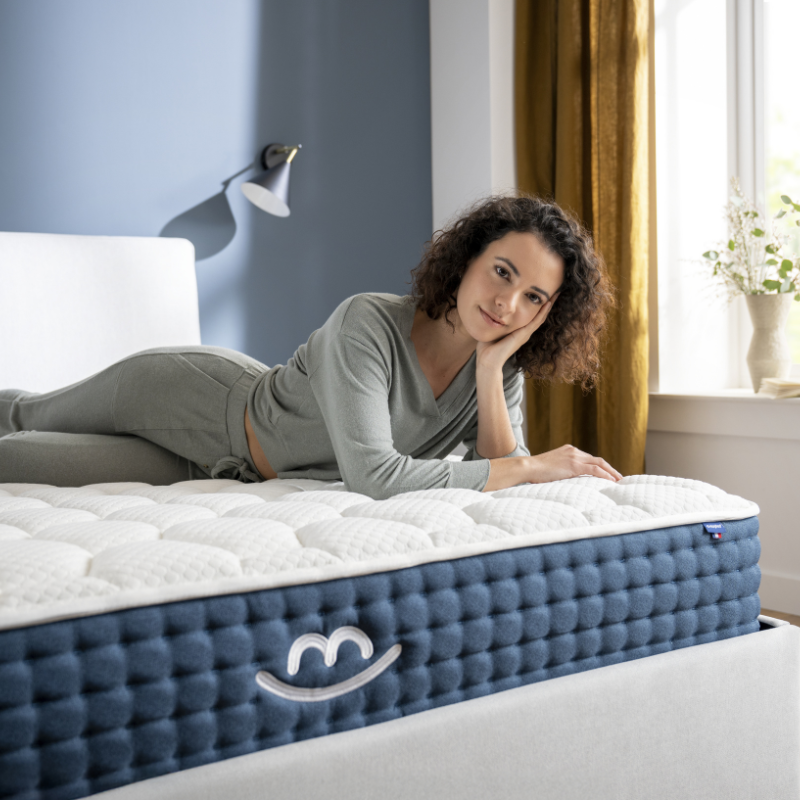
Sleeping on your side is one of the most common sleeping positions, and it can be very comfortable if paired with the right mattress. However, side sleepers often experience pressure on their shoulders, hips, and knees if the mattress doesn't provide enough support or comfort. This is why memory foam mattresses are particularly popular with side sleepers. Their ability to conform to the body's curves helps reduce pressure points and improve overall comfort.
Pressure relief for shoulders and hips
One of the biggest challenges for side sleepers is discomfort in the shoulders and hips. A mattress that's too firm can create excess pressure in these areas, while one that's too soft can lack support and impair alignment.
Memory foam mattresses are designed to conform to the body's contours and distribute weight evenly. This relieves pressure on the shoulders and hips , helping to prevent morning stiffness and pain. For side sleepers, this balance of softness and support is essential.

Spinal Alignment and Support
Maintaining a neutral spine is crucial for healthy sleep. Side sleepers risk poor posture if their mattress doesn't conform to their body shape.
Memory foam naturally conforms to the sleeper's curves, keeping the spine in a straight and balanced position. This reduces tension in the lower back and neck. In the long term, proper spinal alignment can also reduce the risk of chronic pain.
Comfort for sensitive joints
Side sleepers often put extra pressure on their knees and shoulders. A mattress that's too firm can exacerbate this problem, especially for people with joint sensitivity or arthritis.
Memory foam provides a cushioning effect that relieves pressure on joints. Many models feature multiple layers of foam: a top layer for softness and a firmer base for stability. This combination makes memory foam mattresses particularly suitable for people with sensitive joints.
Motion isolation for peaceful sleep
For side sleepers who share a bed, motion transfer can be a nuisance. Traditional innerspring mattresses tend to spread motion from one person to the next.
Memory foam, on the other hand, is known for its motion-isolating properties. It absorbs movement instead of diffusing it, allowing both sleepers to rest undisturbed. This feature is particularly beneficial for couples with different sleep patterns.
Choosing the Right Memory Foam Mattress for Side Sleepers
- Firmness Level: Medium-firm to medium-soft mattresses are often best suited for side sleepers, providing both comfort and support.
- Thickness: A mattress of at least 25 cm (10 inches) guarantees better comfort and deeper support.
- Breathability: Modern mattresses, like those from Morphea, incorporate cooling technologies and breathable covers to prevent overheating.
- Durability: High-density foams last longer and retain their support over time.
Conclusion
Side sleepers benefit from the pressure-relieving, spinal alignment, and joint comfort benefits of memory foam mattresses. By conforming to the body's natural curves, these mattresses reduce pressure on the shoulders, hips, and knees, while maintaining good posture. For couples, motion isolation is an added bonus.
At Morphea , our memory foam mattresses are designed to combine comfort, durability, and innovation with built-in cooling technologies. If you're a side sleeper looking for better rest, a memory foam mattress could be the key to waking up refreshed and pain-free every morning.
Memory Foam Mattresses: Myths and Facts You Should Know
Sleeping with your head to the north: myth, tradition or secret to restful sleep?