

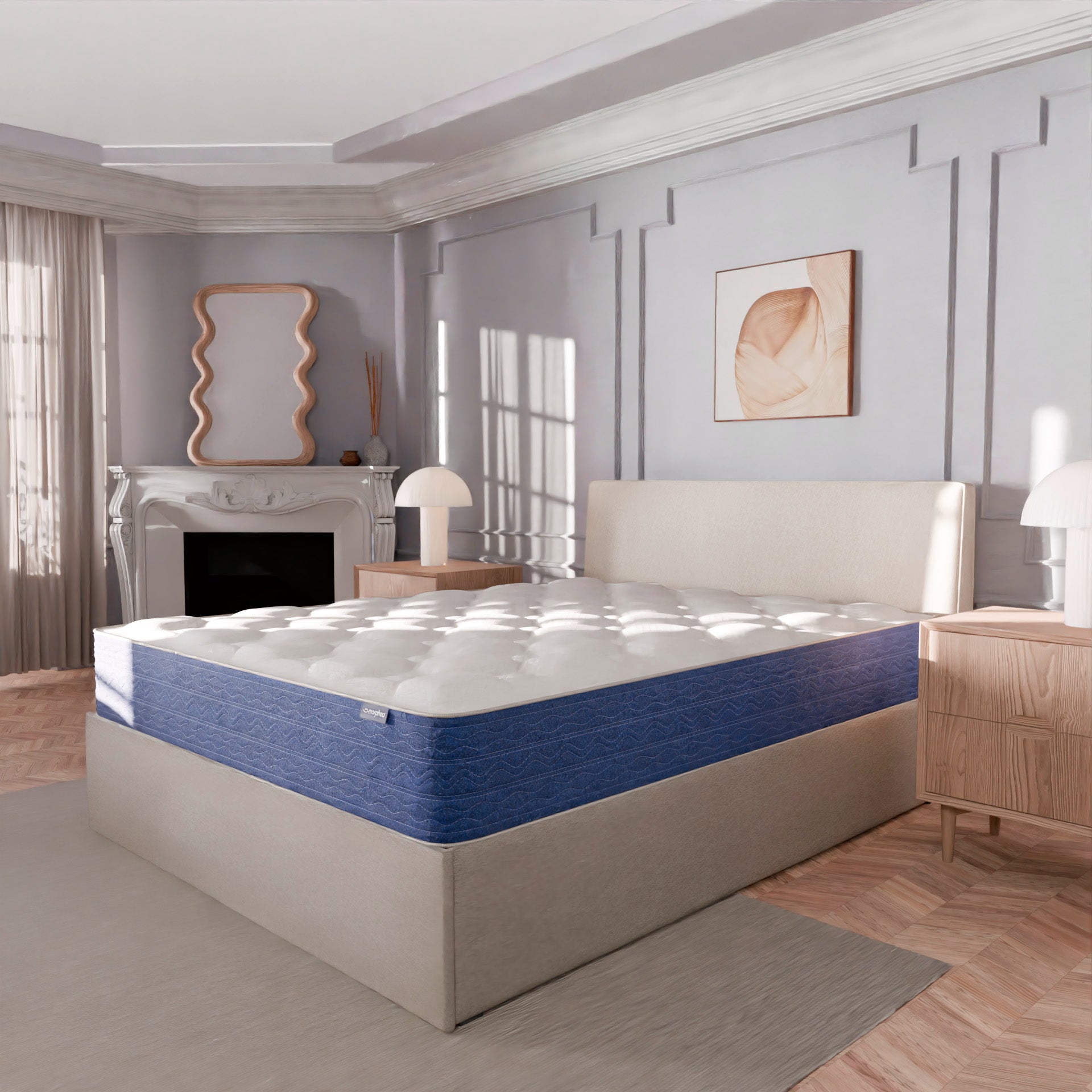

Until now you were sleeping soundly, then one morning you wake up with slight aches. Or you feel that famous hollow that gives the sensation of sinking in. In many cases, it's not your sleep that's the problem, but rather your bedding which no longer provides adequate support.
In this article, we will clarify the actual lifespan of a mattress, the differences according to each type of mattress, the signs that indicate it's time to replace it, and simple tips to make it last longer.
And finally, you will leave with a test to do at home, to find out if it's time to change... or if your mattress can still last.
Want to go further? Discover our 10 maintenance tips to extend the life of your bedding.
Generally, it is said that a mattress should be changed every 10 years. This is a good starting point and, above all, it is a well-supported benchmark: in its booklet Sleep, bedroom and bedding, the INSV (National Institute of Sleep and Vigilance) reminds us that 10 years is a maximum recommended lifespan for bedding.
However, this benchmark must be interpreted intelligently, because the lifespan of a mattress depends primarily on two major variables:
In practice, remember this:
Conversely, well-maintained bedding can last more than 10 years, but only with very good materials and especially an adapted and quality bed base.
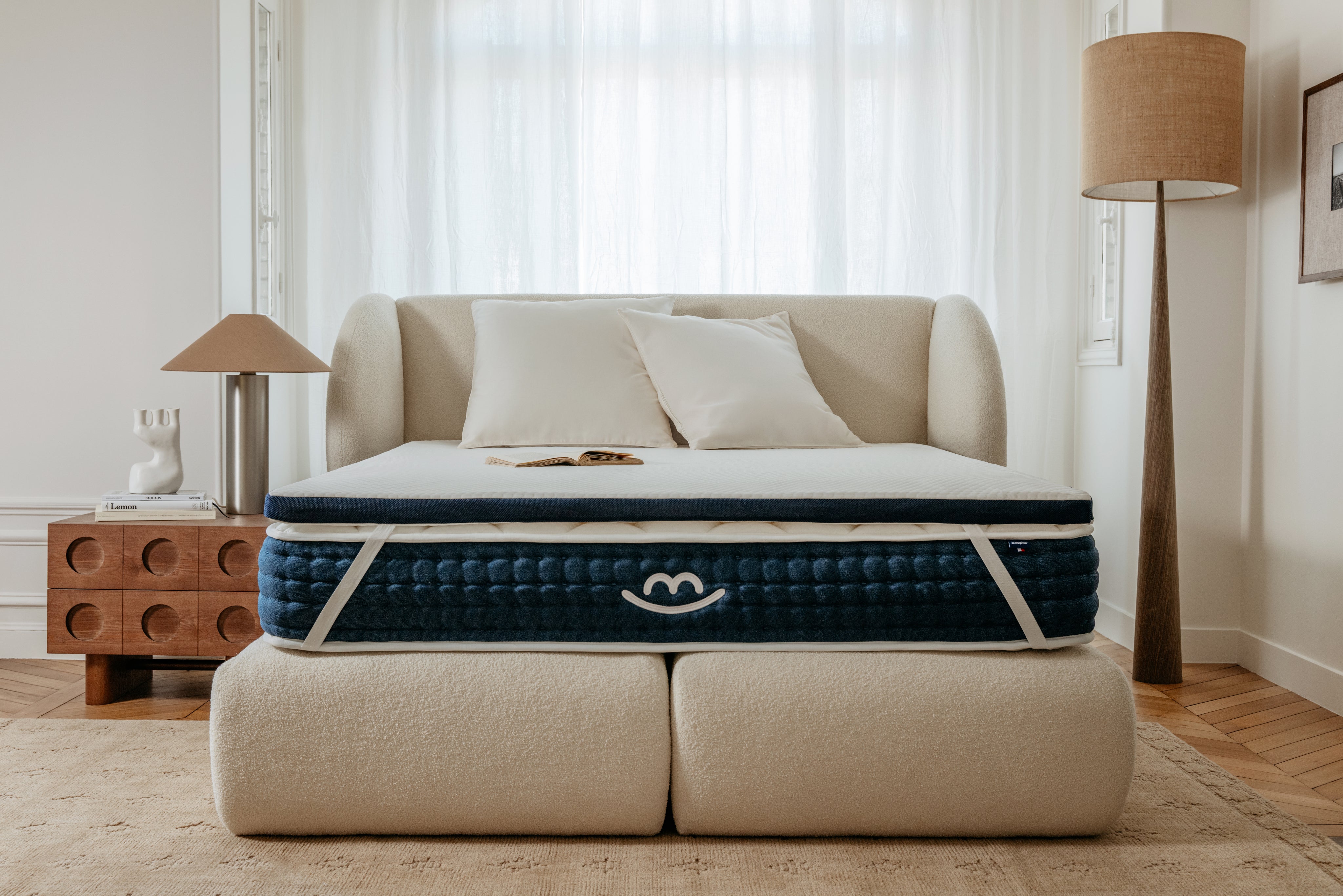
Keep the 10-year mark as a useful and relevant checkpoint. However, not all mattresses age at the same rate: depending on the technology, some will show signs of wear sooner, others later.
The table below provides indicative benchmarks, frequently observed, to be cross-referenced with your own sensations (comfort, support, sagging) and the condition of your bed base.
For equivalent quality, longevity mainly depends on the mattress core (density/quality of the foams, or robustness of the springs) and the base (bed frame/slats), which directly influences its performance and wear.
| Type de matelas | Durée de vie moyenne | Points forts | Point de vigilance |
|---|---|---|---|
| Matelas en mousse | 7–10 ans | prix accessible, confort progressif | densité variable, risque de tassement, support déterminant |
| Matelas en mousse à mémoire de forme | 8–10 ans | accueil enveloppant, soulage pressions | ventilation, sensible à chaleur/humidité selon housse |
| Matelas en latex | 10–15 ans | résilience, aération, longévité | qualité du latex et structure déterminantes |
| Matelas à ressorts ensachés | 10–13 ans | ventilation + indépendance de couchage | usure si sommier inadapté / ressorts sollicités |
| Hybride (mousse + ressorts) | 10–13 ans | équilibre confort/maintien | dépend de l’assemblage et de la densité des mousses |
These benchmarks help to orient oneself, but the decision must remain guided by concrete facts: loss of support, prolonged sagging, discomfort upon waking, and the quality of the support.
In other words, the right time to replace a mattress is not just a question of age: it's when it no longer guarantees, night after night, stable and consistent support.
Before deciding to change your mattress, look at the factors that accelerate wear and tear. They explain why two mattresses of the same age can be light-years apart.
A quality mattress retains its support and stability properties longer. Conversely, when the comfort and support layers wear out (foam mattresses, memory foam), your body shape leaves more lasting impressions, and nightly alignment deteriorates.
Perspiration, lack of ventilation, humid room... All of this fatigues the foams, encourages odors, and reduces the lifespan of your mattress.
The INSV reminds us of an often underestimated point: we lose an average of 40 cl of water per night, which represents nearly 300 liters per year for a couple to be absorbed/evacuated by the bedding.
This humidity contributes to wear and tear, and can also degrade the hygiene of the sleeping surface.
A high-performance mattress, regardless of the type of mattress, if it rests on a worn support, will tend to age faster.
Quality bedding, including adequate support (ottoman bed, bed frame, bed base) naturally extends the life of your mattress. Less wear, more comfort.
To find out if it's time to replace your mattress, rely on three types of signals: what you feel (pain, less restorative sleep), what you see (hollows, sagging), and hygiene (odors, humidity, allergies).
Together, they indicate whether maintenance needs to be adjusted... or if the mattress needs to be changed.
If you check 3 or more signs, especially if it's sagging, pain, or nocturnal restlessness, it's reasonable to consider changing your mattress.
Simple actions, easy to implement. Because extending the life of a mattress is not an impossible mission, it's a small routine to put in place.
We insist, using a mattress protector is one of the best ways to preserve your bedding. It limits humidity, stains, and protects your mattress cover. The result is better comfort over time, and an optimized mattress lifespan.
Without becoming obsessive: rotating the head/foot every 2-3 months helps distribute wear, especially if you always sleep on the same side.
Your mattress needs a stable base to maintain its qualities over time.
If the bed base sags, if the slats are damaged, or if the bed frame lacks rigidity, the mattress deforms faster and support becomes less uniform.
Simply check three points: a perfectly flat surface, a structure that does not move, and a solid central support for two people. Also consider ventilation: a base that allows air circulation helps limit humidity accumulated during the night.
If your support is several years old, creaks, moves, or has softer areas, replacing it is often the most effective way to extend the life of your bedding.
Discover our collection of beds and bed bases to regain restful sleep.
Your decision is made, it's time to change? Then let us simplify the choice of a new mattress for you.
To change your mattress without regret, keep these 3 benchmarks in mind:
At Morphea, the collection of your old mattress is designed as a real service: simple, free (in mainland France), and above all more responsible than an unmanaged bulky waste disposal. The benefit is twofold: you free up space immediately, and your old mattress joins an organized treatment channel (collection, sorting, material recovery when possible), which limits waste.
It's also a way to make your purchase more serene: you focus on your new comfort, without wondering what to do with the old one. Finally, from a regulatory standpoint, Morphea is registered in the national register of furniture product manufacturers under number FR038519_10UGBX, in accordance with the obligations of the sector (article L 541-10-1 10° of the Environmental Code).
The lifespan of a mattress is judged less by a date than by its actual effectiveness: stable support, homogeneous surface, constant comfort night after night.
Analyze what you feel upon waking and what you observe on the surface of the mattress. If these signals add up, replacing your mattress becomes a choice of comfort, but also of sleep quality.
And if you change, consider all of your bedding. A high-performance mattress deserves reliable support to fully express its qualities.
When the comfort you feel decreases sustainably, when you wake up stiffer, or when you notice sagging, your mattress often no longer provides adequate support. Add to this hygiene signals (odors, humidity, more frequent allergies): it's generally time to replace your mattress.
A mattress becomes too old when it no longer fulfills its function: stable support, uniform surface, and consistent comfort. Generally, the average lifespan of a mattress is 10 years, but this is just a guideline; it's primarily the signs of wear (deformations, pain upon waking, less restorative sleep) that determine when it needs replacing.
Because a mattress is subjected to repeated stresses every night (pressure, movements, heat, humidity). Over time, the materials wear out, the support becomes less consistent, and the comfort zones compress. The 10-year mark therefore serves as a reasonable checkpoint to consider changing your mattress and thus preserve the quality of your sleep.
Not systematically. It is often recommended if the bed base is the same age, if it moves, creaks, has damaged slats or an uneven surface. A suitable bed base extends the life of the mattress and stabilizes comfort. Conversely, a worn base can accelerate the wear of a new mattress.
For equivalent quality, latex, pocket spring, and hybrid mattresses are often among the most durable, thanks to their good resilience. Springs are known for their durability, and hybrids often combine this robust core with comfort layers. In any case, longevity also depends heavily on maintenance and a suitable bed base.
Yes, this can happen with solid materials, good maintenance (protection, ventilation), and a stable base. However, it is not an objective in itself; beyond ten years, you must be particularly attentive to the support, sagging, and hygiene of your mattress. If any of these points deteriorate, it is better to replace it than to prolong its use. It's a matter of health.

Best hybrid mattress: selection and comparison 2026 – Morphea

Memory Foam Mattress Topper: The Best Mattress Topper for Back Pain
A memory foam mattress topper is a simple and effective solution for relieving back pain. Thanks to its ability to conform to the body's curves, it perfectly aligns the spine, reduces pressure points, and improves nighttime comfort.
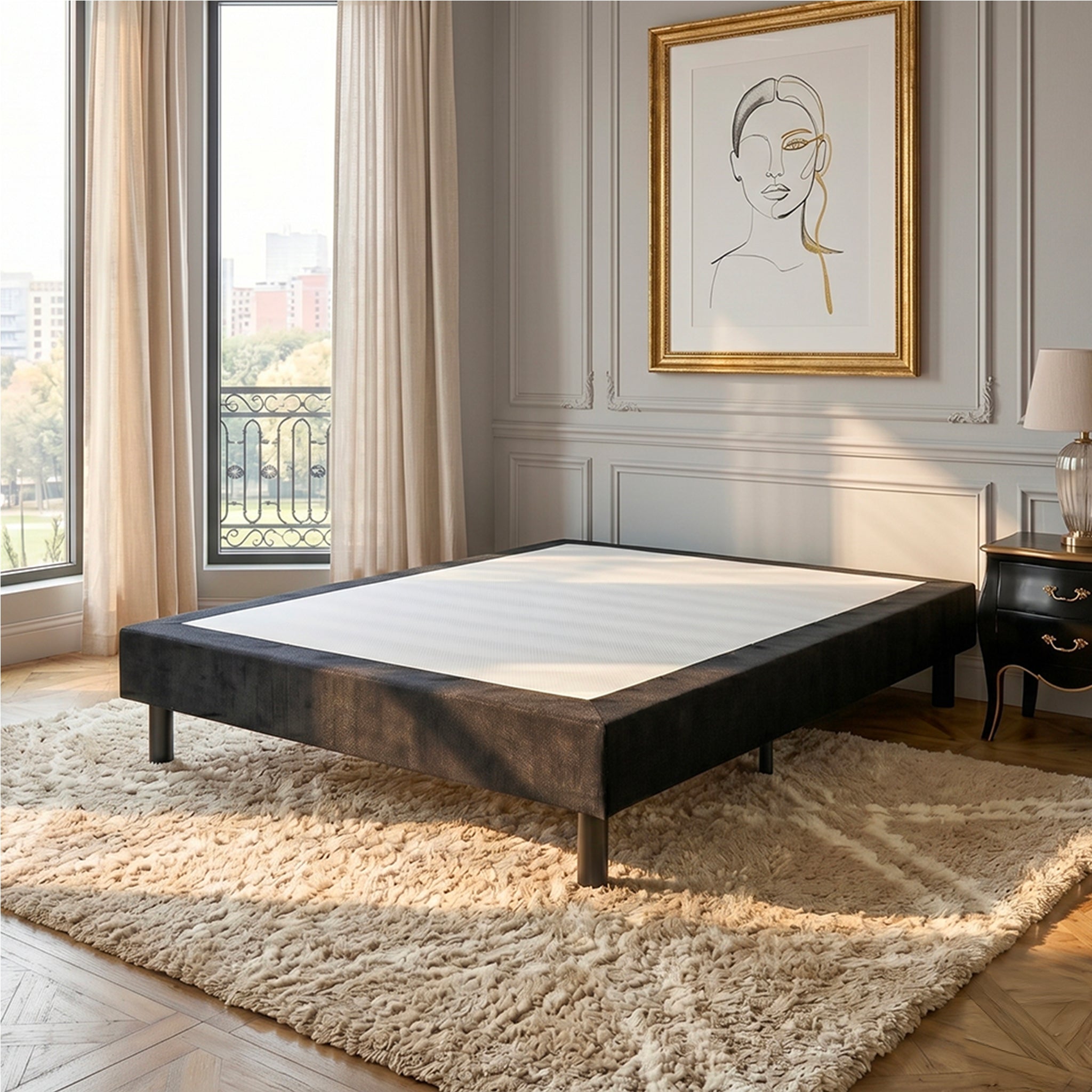
Which bed base to choose for a good night's sleep?
