

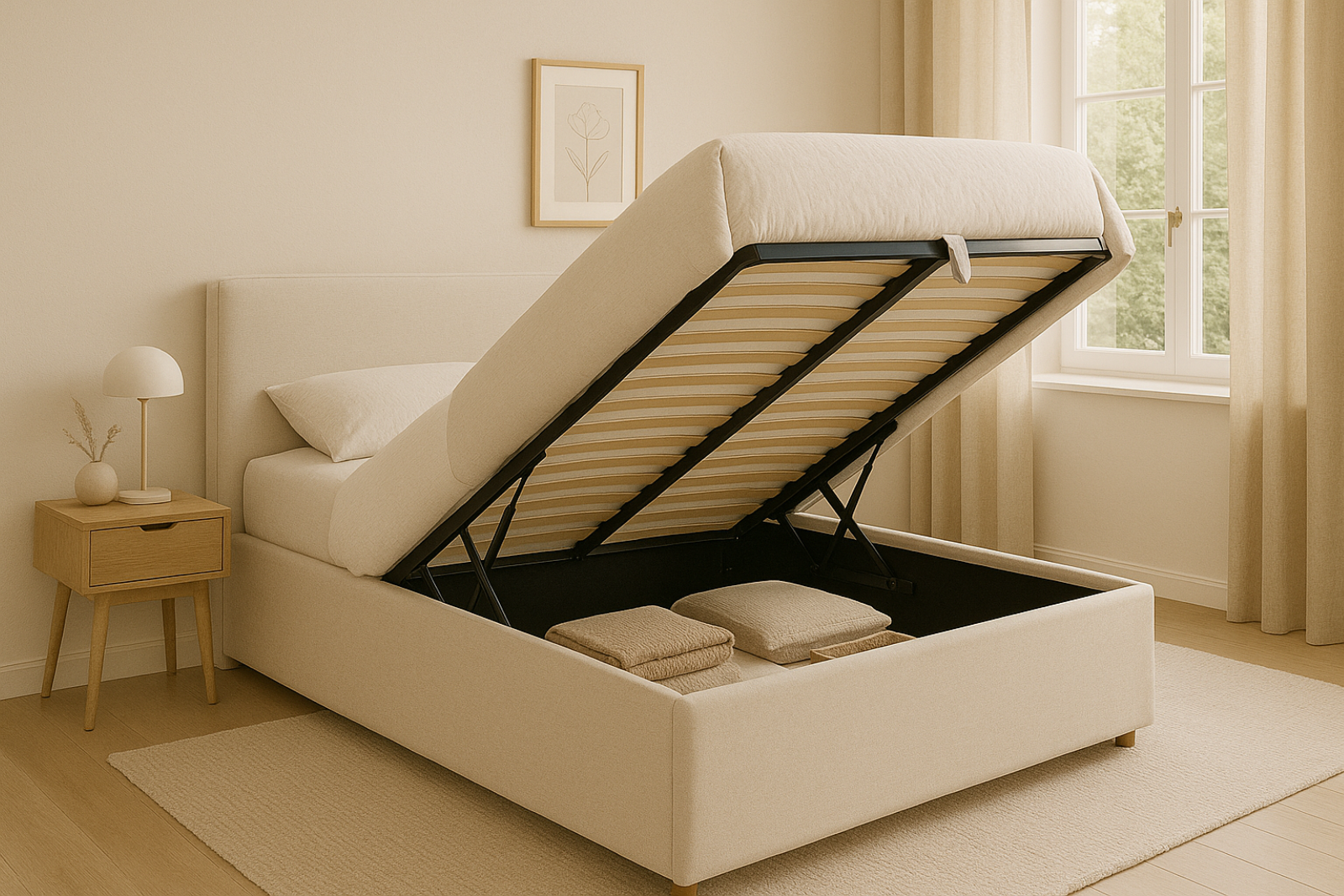
Want to save space without sacrificing comfort? That's exactly what a storage bed promises.
But for this space-saving to remain a real plus in everyday life, the choice of mattress must not be left to chance. An unsuitable model can complicate opening or unbalance the expected comfort.
So, which mattress for a storage bed should you choose? Should you prefer a foam mattress, a spring mattress, a latex mattress, or a memory foam mattress? Here is a complete guide to choosing a mattress truly suited to your bed... and your sleep.
Still hesitating about the right model? Consult our guide to choosing the mattress most suited to your needs.
In summary
- A mattress for a storage bed must be compatible with the bed frame, especially in terms of weight, height, and ease of opening.
- Several technologies can be suitable: foam, memory foam, pocket springs, or hybrid, provided you choose a model adapted to your needs.
- The right approach is to start with the bed before choosing the mattress, to combine comfort, practicality, and durability in everyday life.
Why does the mattress matter so much with a storage bed?
For a classic bed, comfort is the main concern. For a storage bed, you need to think about both comfort and practicality.
The mattress must obviously support the body well, but also remain consistent with the mechanism of the lift-up base. This is therefore an essential criterion: too heavy, it can complicate opening; too light, it can give a less stable feeling depending on the chosen structure.
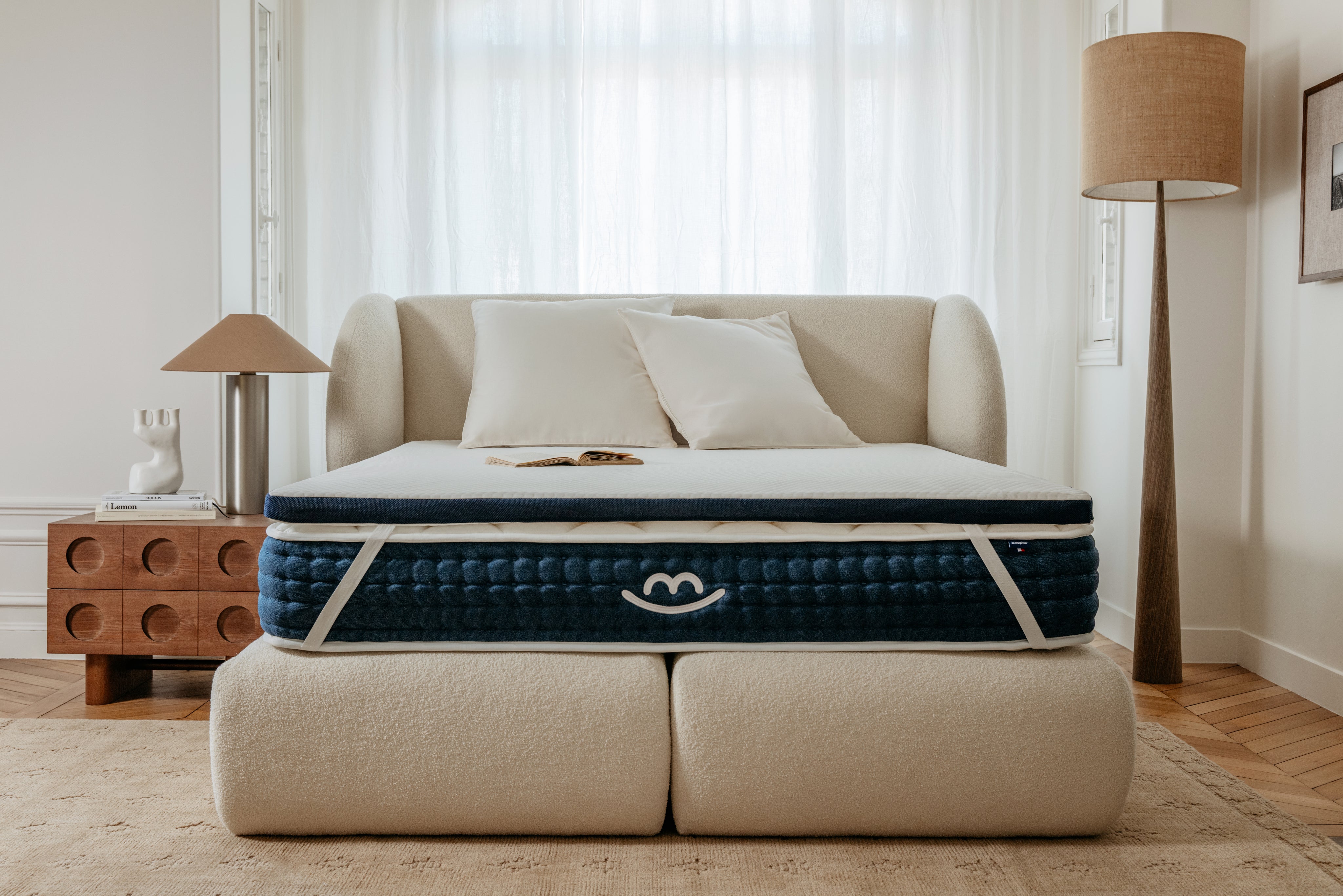
First reflex: check bed compatibility
Before even choosing a mattress, check your storage bed's product sheet. It will give you the most important information: the recommended weight.
This is especially true if your storage bed offers assisted opening or a system designed for frequent use. MORPHEA storage beds are compatible with different types of mattresses, provided you respect the recommended weight.
Weight: the essential criterion not to be overlooked
Mattress too heavy: what are the risks?
A mattress that is too heavy makes the opening mechanism difficult to maneuver. In the long run, this wears out the lift system and discourages you from using the storage.
As a general rule, avoid mattresses exceeding 35 to 40 kg for a 160x200 cm bed.
Natural latex mattresses are often in this category. Comfortable, yes, but their weight can be a problem for a storage bed.
Mattress too light: watch out for comfort
Conversely, a mattress that is too light may lack density and support. A mattress that is too light does not necessarily guarantee good sleep quality. The ideal is to find the balance between lightness and sufficient density for good recovery.
What thickness for a mattress suitable for a storage bed?
The recommended thickness for a storage bed mattress is between 20 and 30 cm. Below that, comfort may be insufficient. Above that, some storage bed mechanisms may be hindered when opening.
Morphea mattresses, with their generous thicknesses (up to 30 cm) designed for comfort, fit perfectly within this ideal range. To be checked according to your storage bed model.
What type of mattress should you choose for a storage bed?
Several mattress technologies can be suitable for a storage bed, provided you choose from suitable mattresses. Of course, the right type of mattress also depends on your sleeping profile.
Foam / memory foam mattress
The foam mattress often remains a safe bet for a storage bed. Why? Because it generally combines maneuverability, good support, and accessible comfort.
High-resilience foam is particularly interesting if you want more durable support.
And if you like enveloping sensations, memory foam provides a real plus by limiting pressure points. It molds to the contours of the body, distributes pressure, and improves sleeping independence. For a double storage bed, this is a real advantage when one of the sleepers moves during the night.
Pocket spring mattress
Pocket spring mattresses combine the enveloping comfort of a hotel bed with good sleeping independence, perfect for couples. Their weight varies depending on the thickness and number of springs. Find out the exact weight before confirming your choice.
At Morphea, our pocket spring models have been designed to offer generous comfort without unnecessarily weighing down the ensemble. A real plus for a storage bed.
Latex mattress
Latex mattresses are appreciated for their natural qualities and durability. But they are often the heaviest type of mattress. On a storage bed, they can make opening difficult, especially if you have to do it alone. Reserved for reinforced lift mechanisms.
Hybrid mattresses: the best of both worlds
Hybrid mattresses combine a pocket spring base with a comfort layer of foam (memory foam or Ergofeel). The result: precise support, 5-star comfort, with controlled weight. A very interesting option for a double storage bed.
Double storage bed: do you need two separate mattresses?
For a double storage bed (160 or 180 cm wide), a 2-person mattress is sufficient in most cases. The mechanisms are designed to support the weight.
But if you have very different comfort needs for two people, some storage beds can accommodate two 1-person mattresses side by side, an even more personalized solution.
Our Morphea advice
For everyday use, the simplest is to aim for a comfortable, breathable mattress that is consistent with the weight accepted by your storage bed.
First, check the limits or recommendations of the bed base, then choose the technology that corresponds to your comfort.
If you like a cocoon-like feel, opt for memory foam. If you are looking for more ventilation and sleeping independence, pocket springs or hybrid are often the most relevant options.
Conclusion
A storage bed is an excellent solution for saving space without sacrificing comfort. But you still need to choose the right mattress: easy to handle, dense to the right extent, and comfortable night after night.
At Morphea, each model is designed with this balance in mind. Made in Europe, tested for durability, delivered with a 100-night trial period and a 10-year warranty.
FAQ
Which mattress to put on an ottoman bed?
On a storage bed, you can install a foam, memory foam, pocket spring, latex or hybrid mattress, provided it remains compatible with the bed base and its opening mechanism. MORPHEA pocket spring and hybrid mattresses work very well with a storage bed, provided you follow the recommendations for the chosen model.
What is the best mattress for an ottoman bed?
Our most premium recommendation for an ottoman bed is our Victoria model. It stands out with a hybrid design, 30 cm thickness, 7 ergonomic zones, an integrated topper with Air Memory® foam for a more enveloping feel and high-end comfort. If you prefer a firmer and more accessible model, Jade is an excellent alternative with 26 cm thickness, 7 ergonomic zones, and firm and resilient support.
What are the disadvantages of an ottoman bed?
An ottoman bed doesn't really have any major drawbacks, but it does require more attention than a classic bed in three areas: mattress compatibility, air circulation, and the quality of the opening mechanism. This is why we recommend an assisted opening and a slatted base, to prevent the foam from suffocating and to maintain a healthier sleeping surface over time.
What are the benefits of an ottoman bed?
The storage bed has a very clear advantage: it allows you to create a real storage space under the mattress without adding extra furniture to the room. It's a practical and aesthetic solution to optimize space, especially in a shared bedroom or when you lack closets, while maintaining the comfort and stability of the bedding.
What is the maximum weight a storage bed can support?
There is no single weight valid for all storage beds, as this depends on the structure, dimensions, and mechanism of the chosen model. For the Era storage bed, we recommend a maximum weight of 55 kg and a maximum height of 32 cm. For other models, it is always best practice to check the product sheet of the storage bed in question before finalizing your choice.
Our latest articles to discover
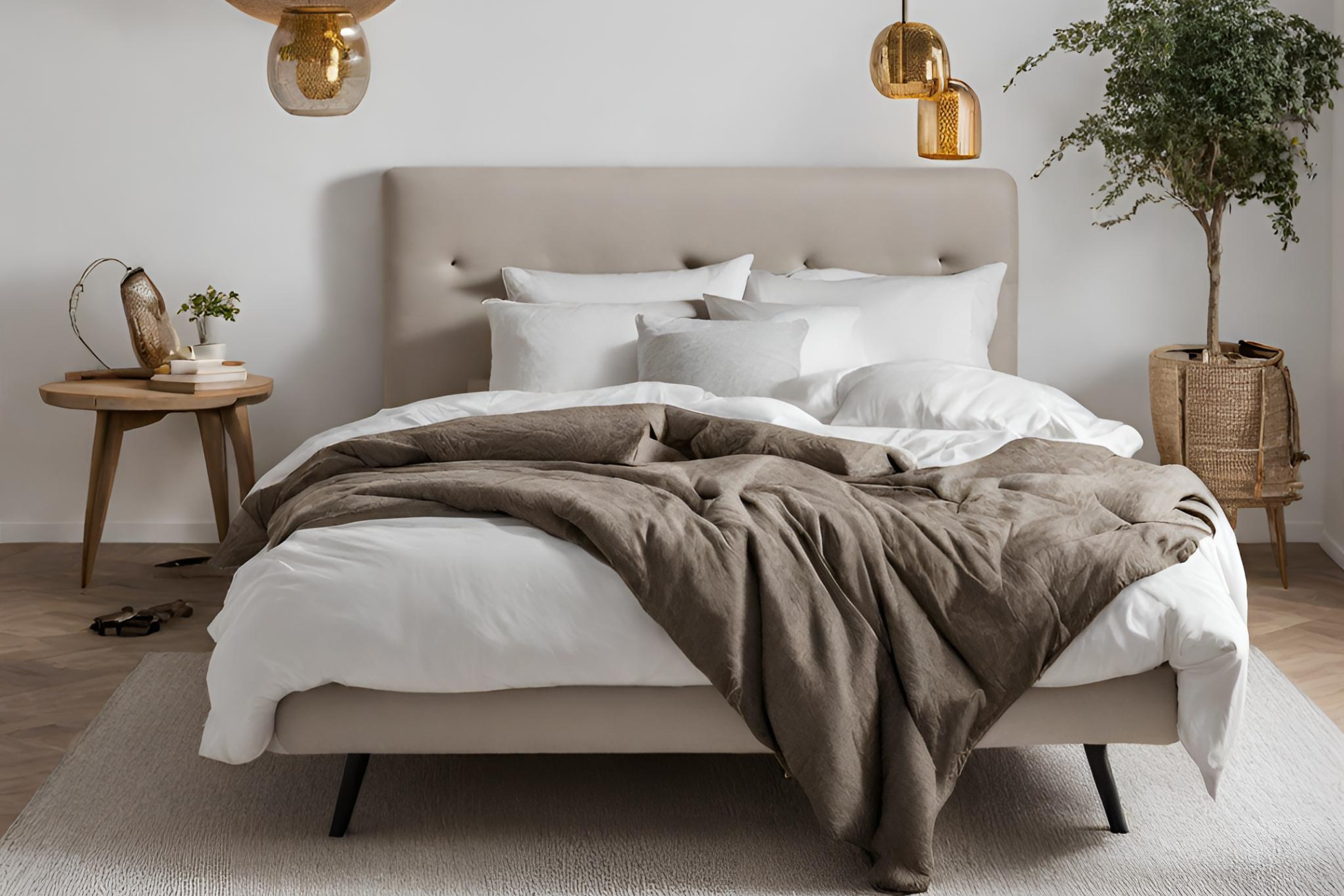
Best hybrid mattress: selection and comparison 2026 – Morphea

Memory Foam Mattress Topper: The Best Mattress Topper for Back Pain
A memory foam mattress topper is a simple and effective solution for relieving back pain. Thanks to its ability to conform to the body's curves, it perfectly aligns the spine, reduces pressure points, and improves nighttime comfort.
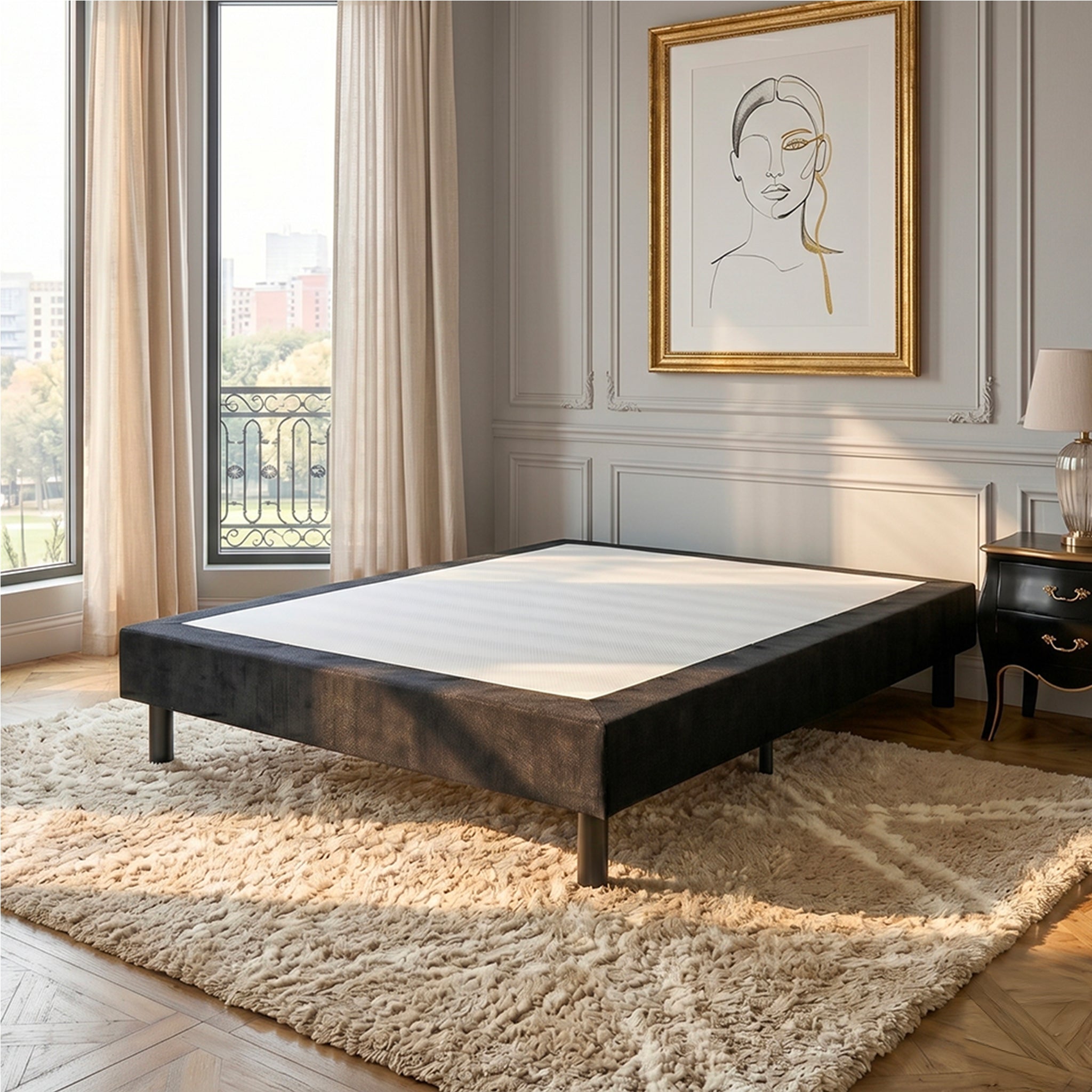
Which bed base to choose for a good night's sleep?
