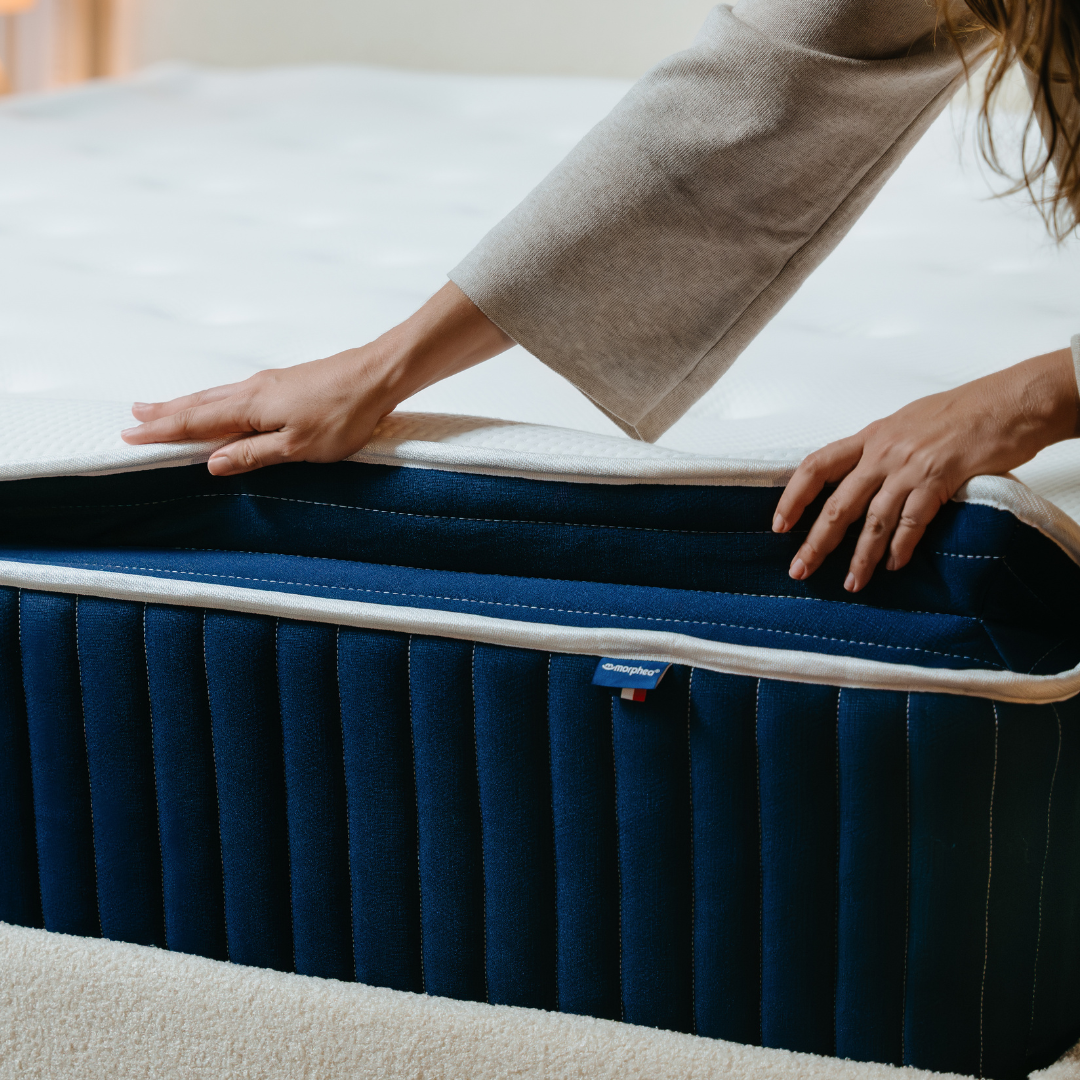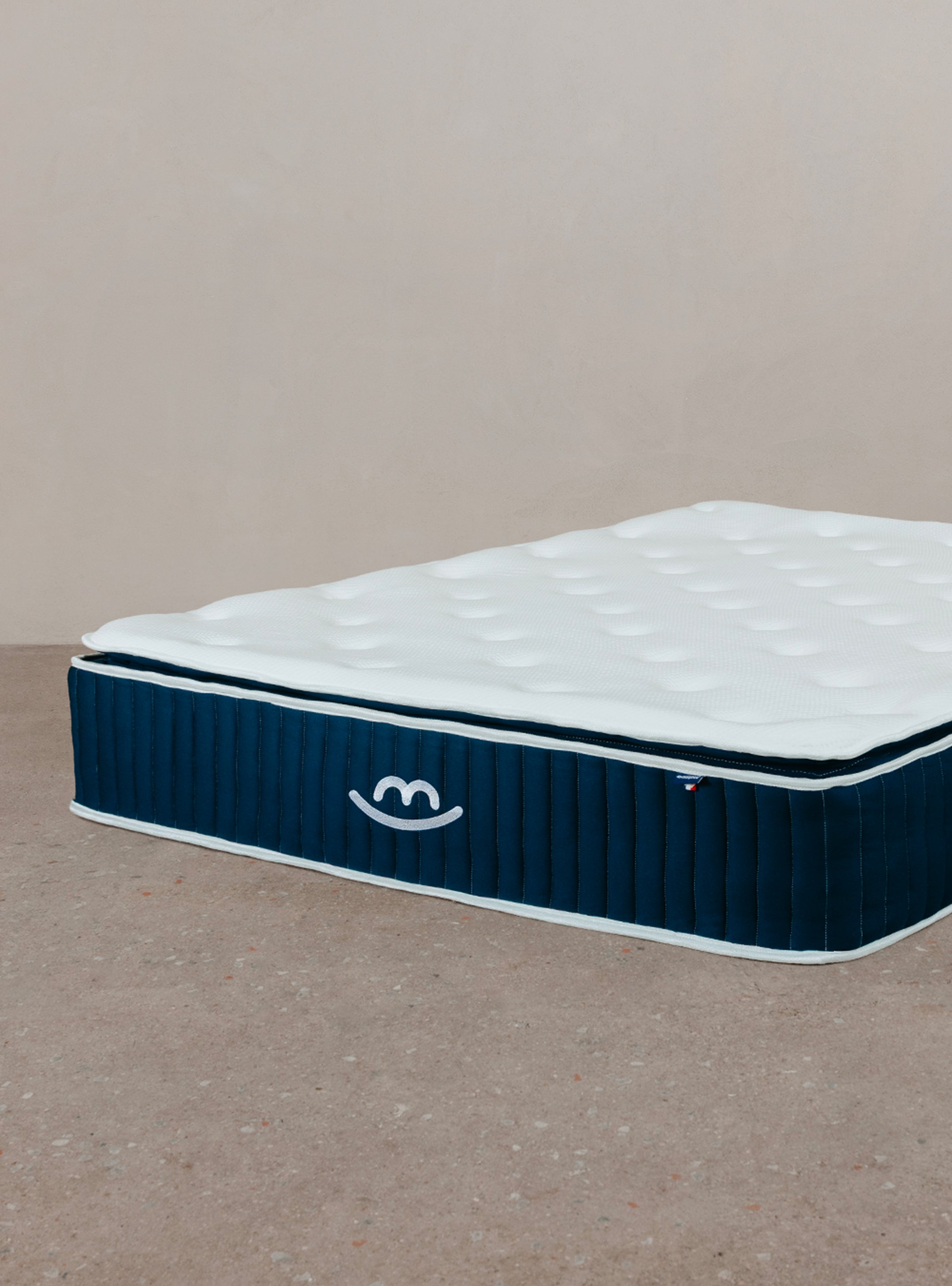
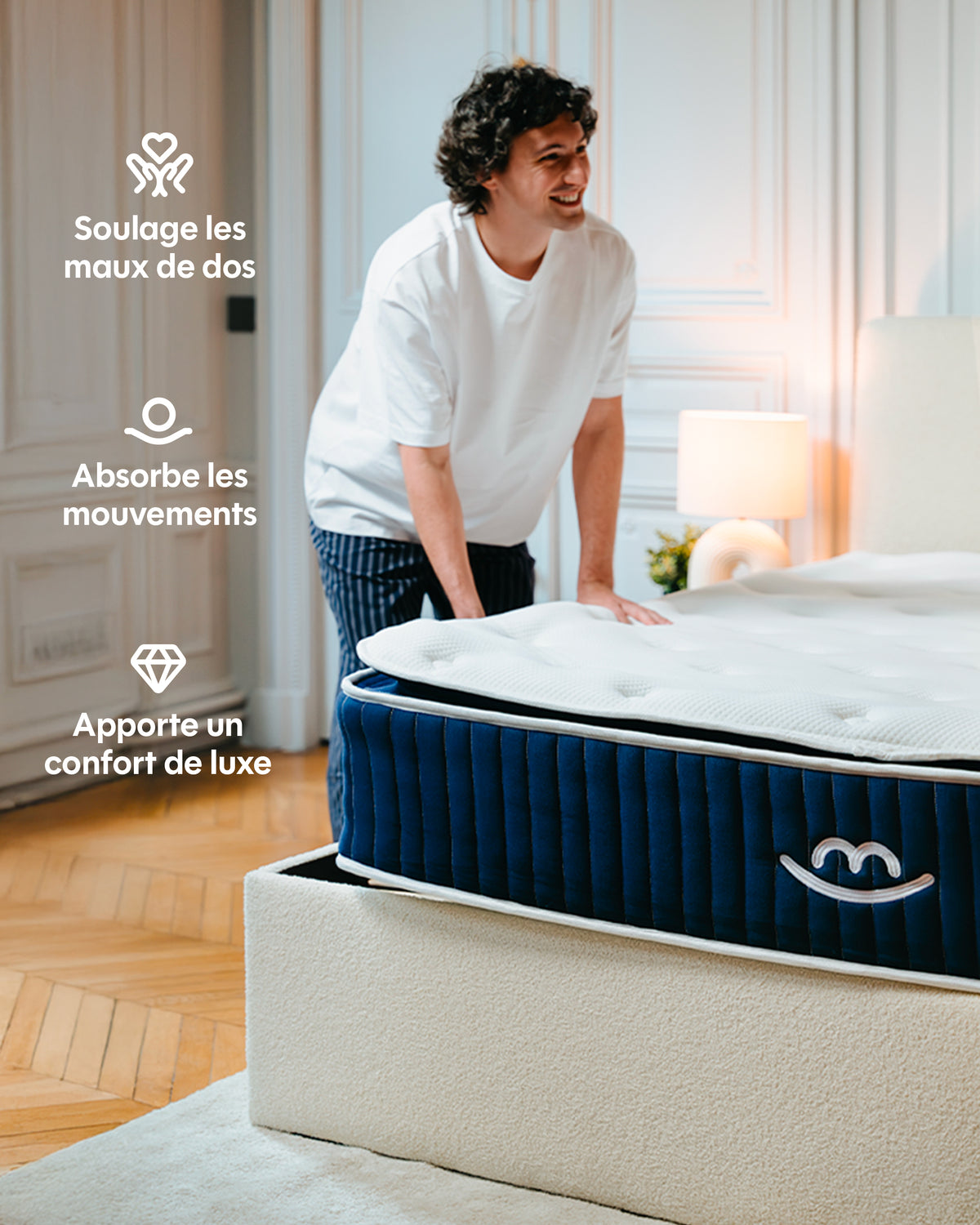
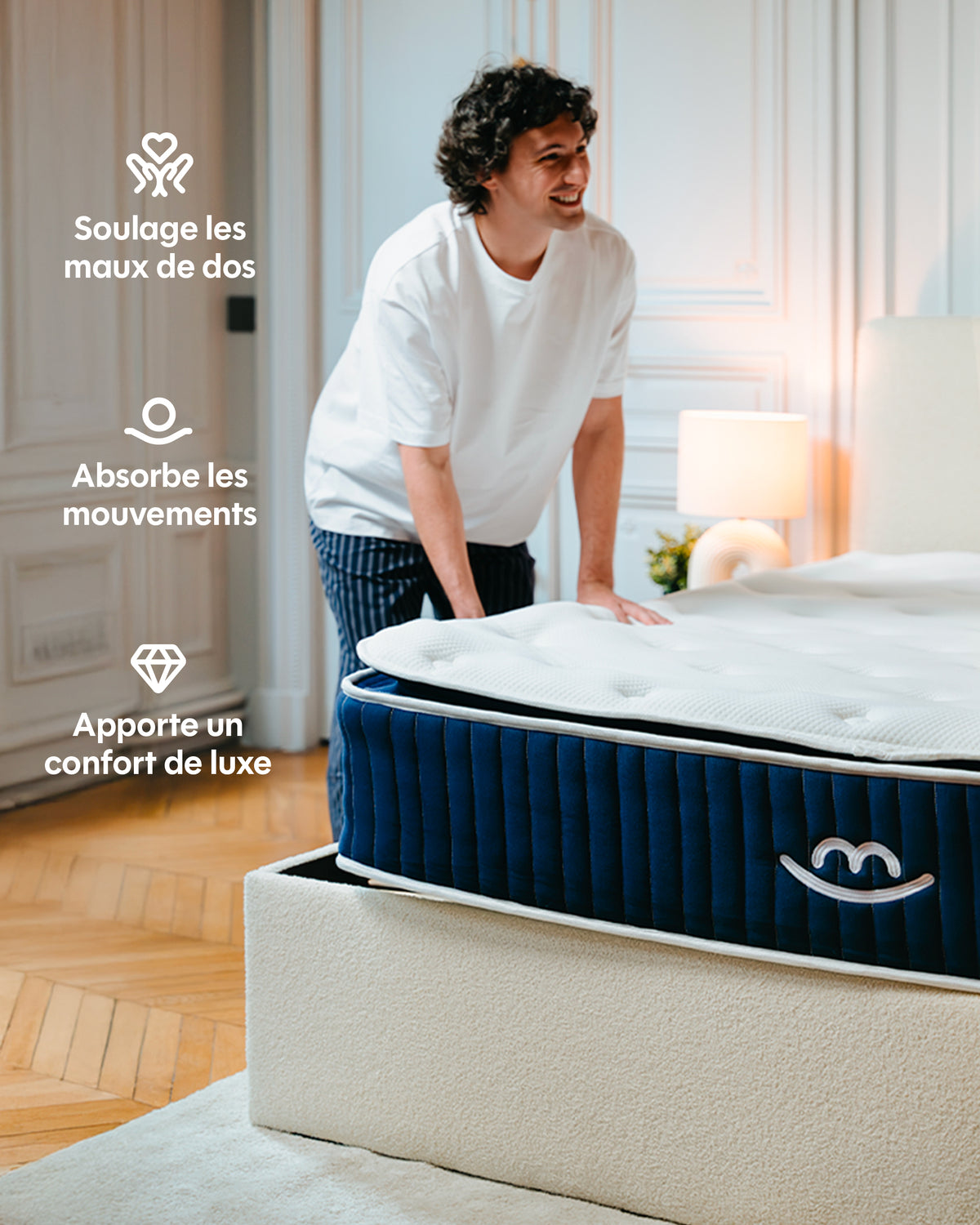
Premium comfort with built-in pillow top
12 inches thick
Soft top with integrated mattress topper
Ideal for couples (separate sleeping areas)

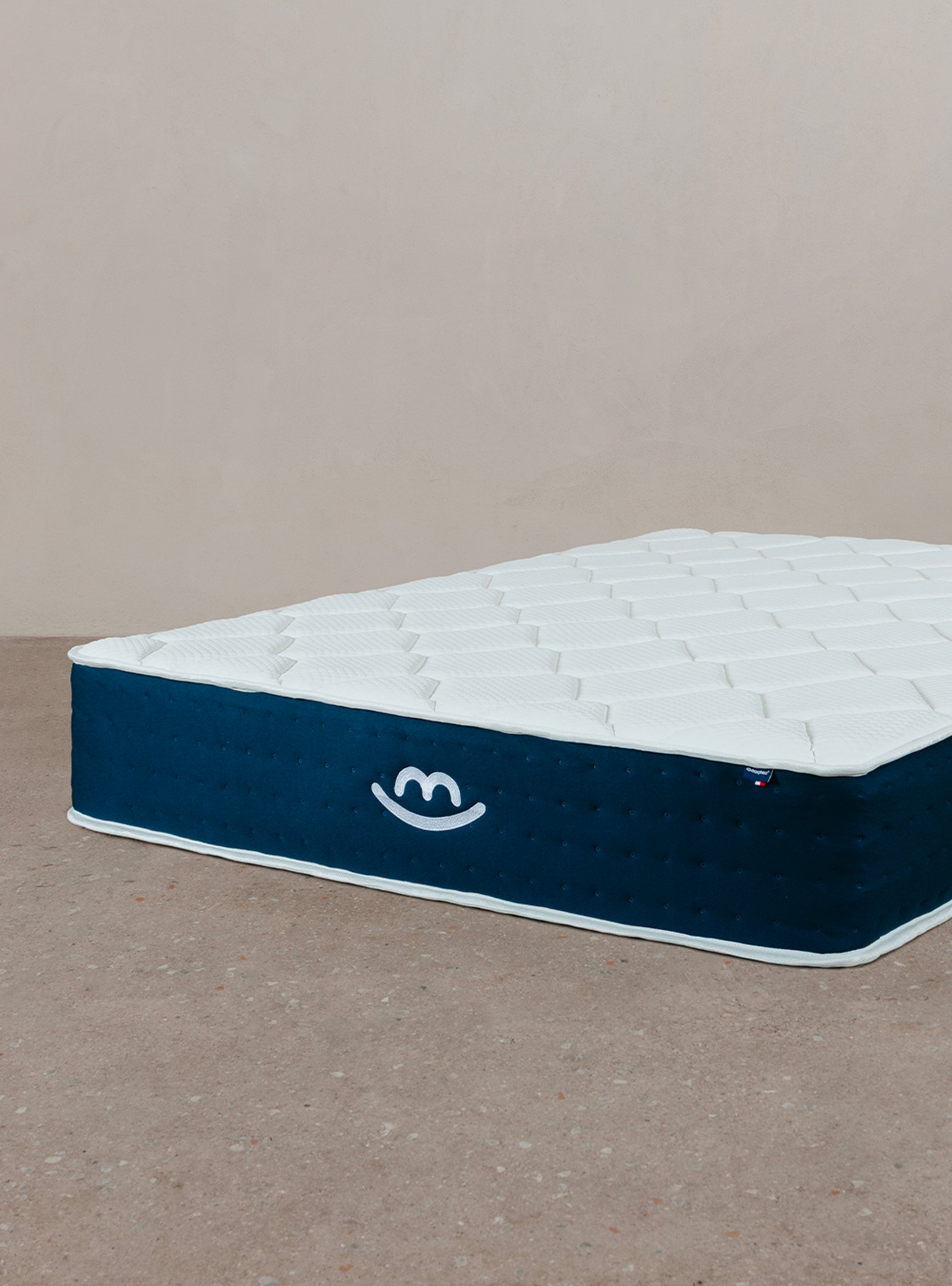
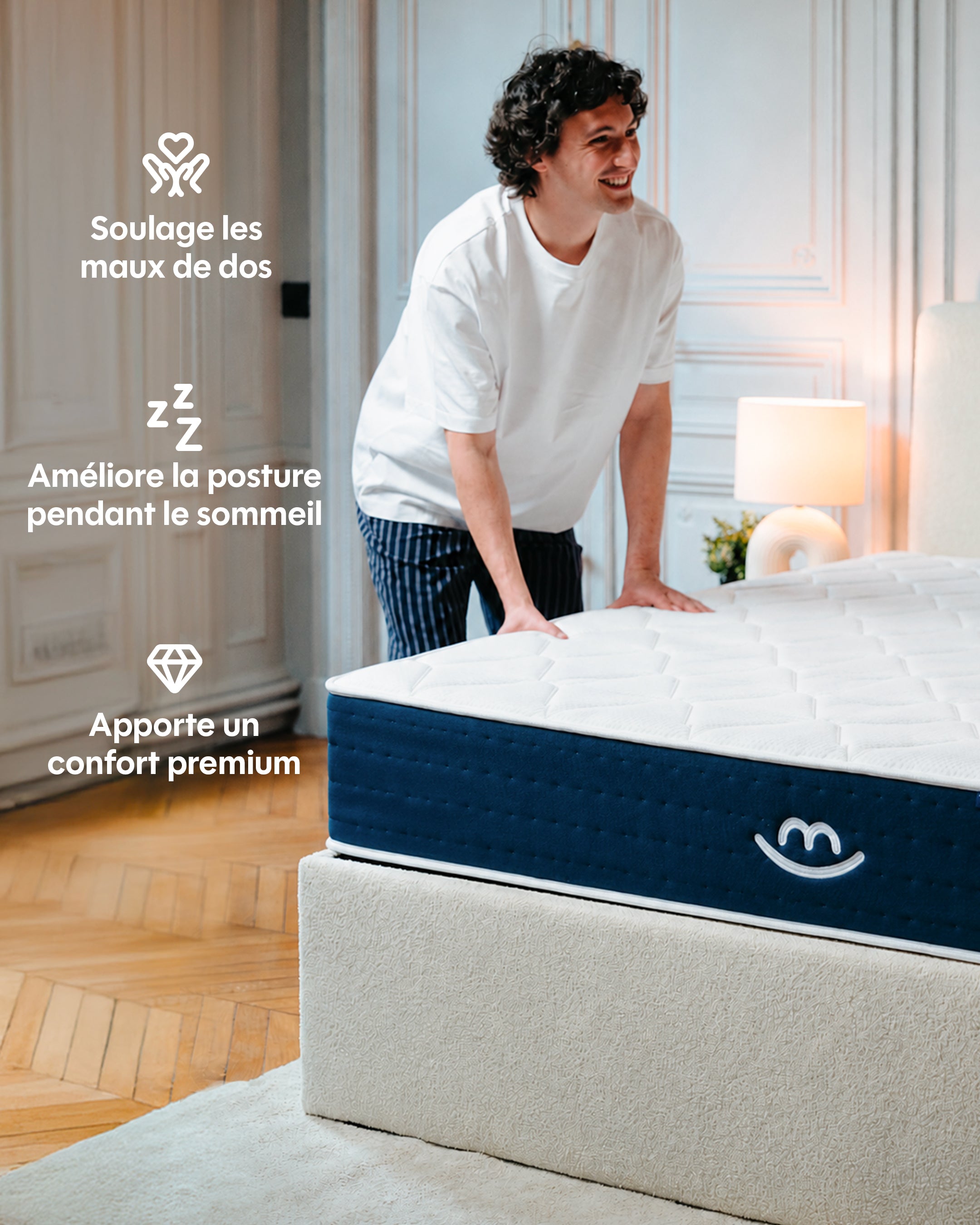
Firm and supportive
10.2 inches thick
Firm and toned
Ideal for ergonomic support in daily life

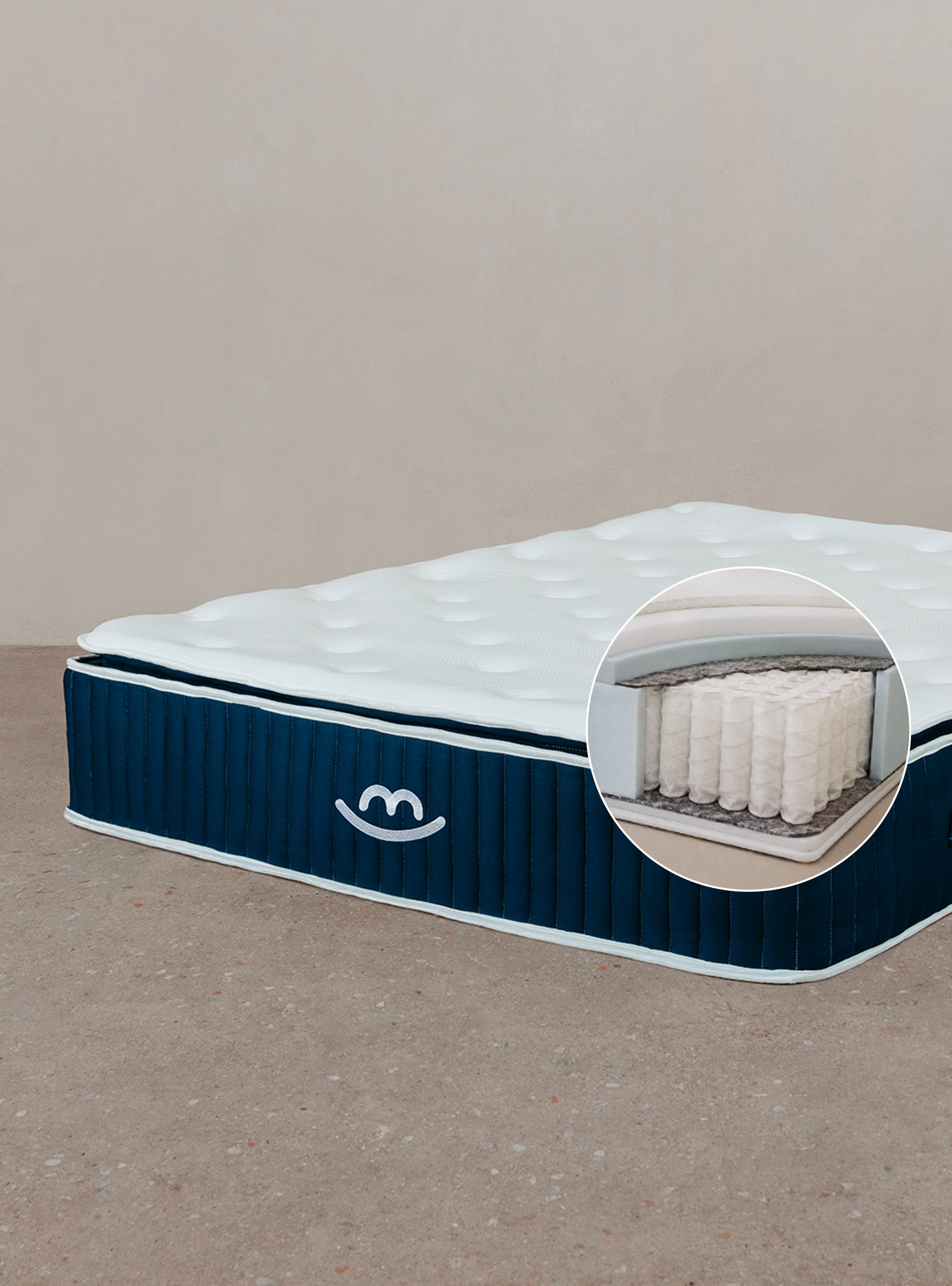
Premium comfort with built-in pillow top
30 cm thick with reinforced fairing
Welcoming and comfortable
Enhanced luxury hybrid: ideal for couples

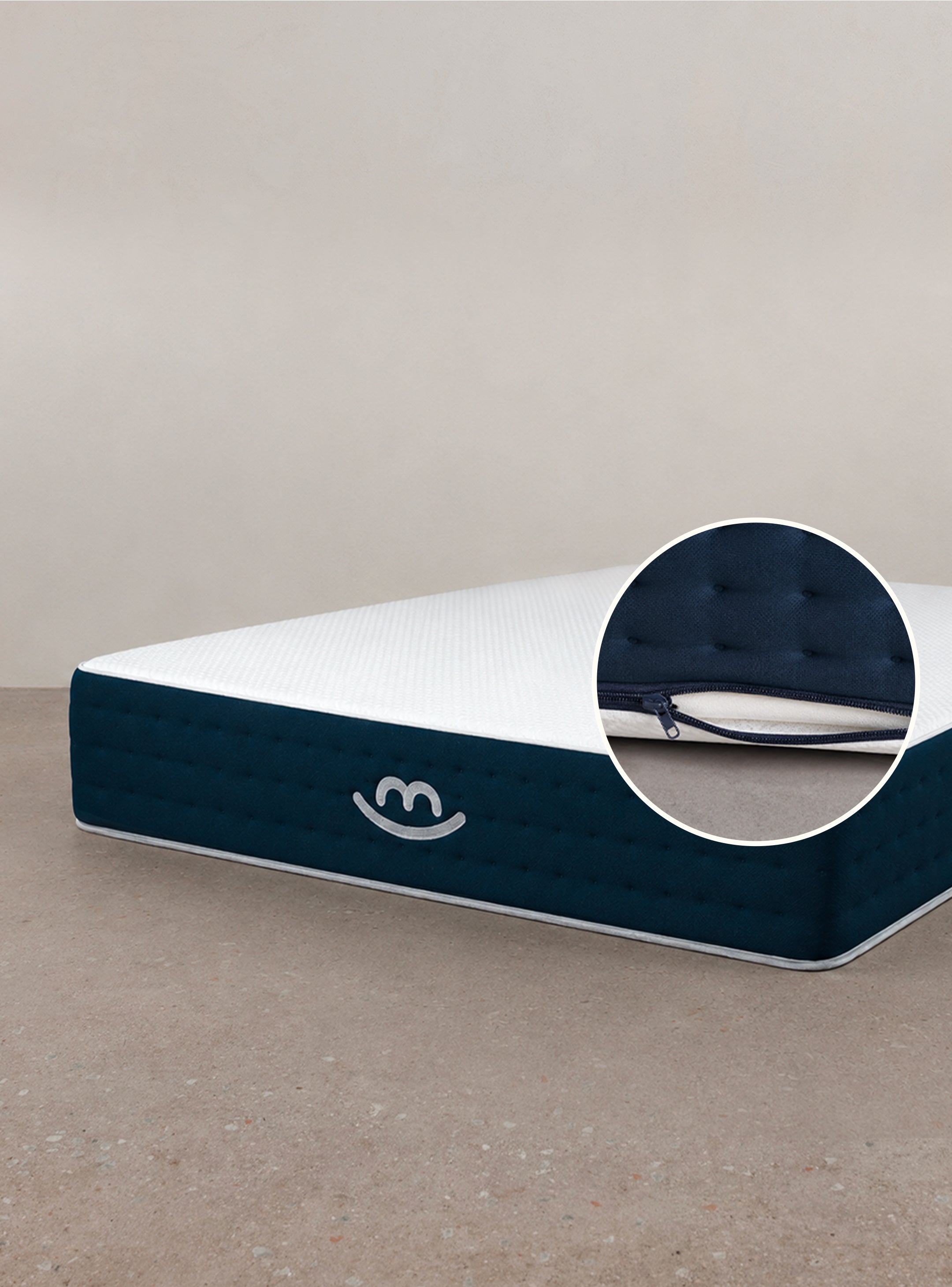
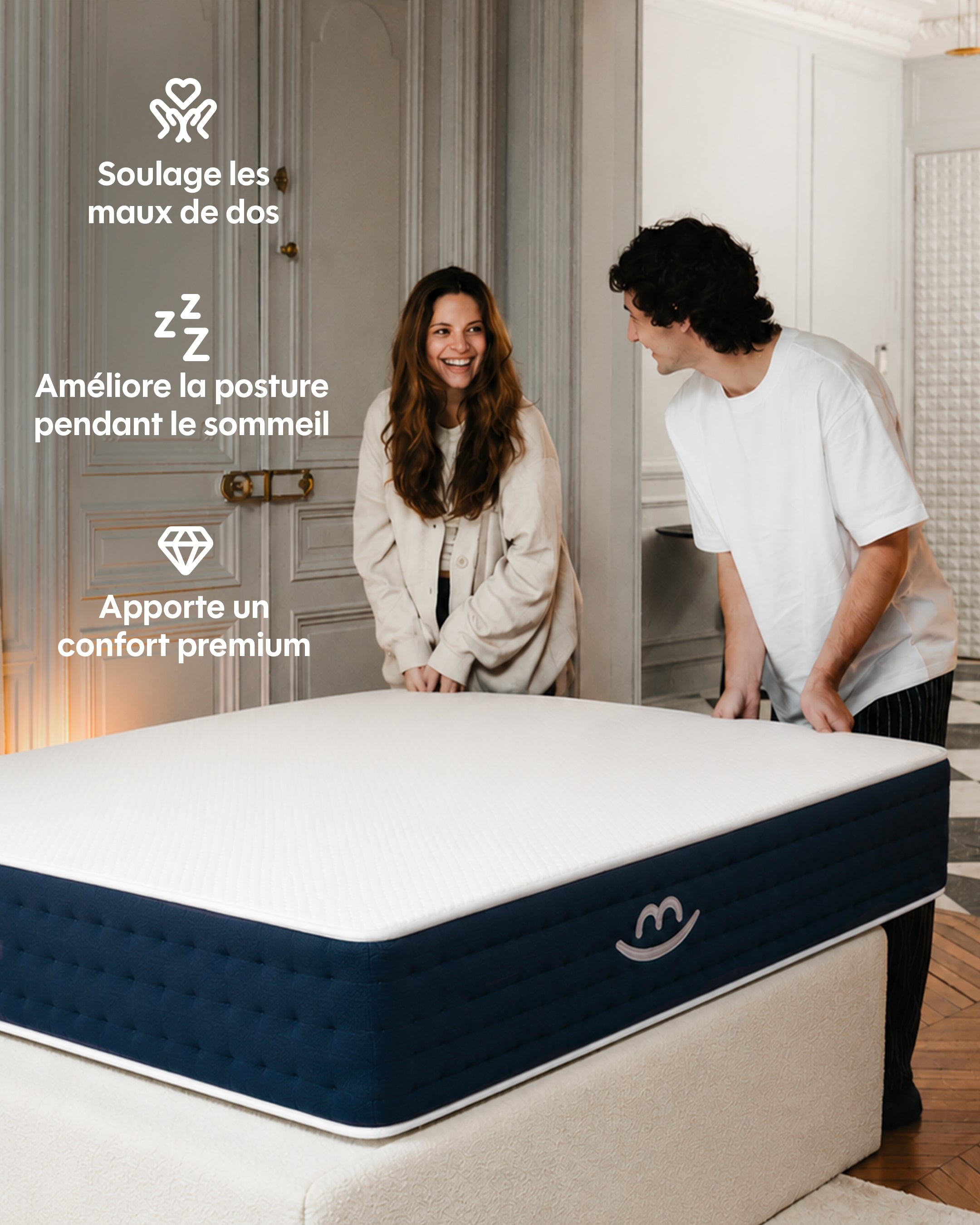
Firm and supportive
10.2 inches thick
Firm and toned
Ideal for ergonomic support in daily life
Our clients are talking about us...
Let customers speak for us
100 night trial
Try your new mattress for 100 days to form your own opinion.
Free delivery
Enjoy free delivery and get your product delivered within 3 to 7 days.
Payment in up to 24 installments
Feel free to pay in installments with our partners Alma and Younited Pay.
Responsive customer service
Our French customer service will provide you with the best support.
In summary
-
The best mattresses for the back are hybrid models : they combine springs (firm support) and memory foam (comfort and pressure point reduction).
-
Choose your mattress according to your sleeping position :
-
on the back → firm support and comfort zones,
-
on the side → memory foam or soft hybrid,
-
on your stomach → firm mattress.
-
Memory foam remains the gold standard for relieving neck and lower back pain.
-
The Morphea Victoria , Jade and Gaia models are among the most recommended for a well-aligned back and restful sleep .
Why choose a mattress specifically designed for back pain?
An unsuitable mattress can worsen your back problems by creating pressure points or misaligning your spine. Our models, rigorously tested and approved by experts, offer the ideal balance between comfort and support. Explore our selection to find your perfect sleep partner and say goodbye to painful awakenings.
Our 3 best mattresses for back pain
The premium option: Victoria luxury hybrid mattress - 30 cm - From €449.99 (-40%)
Bestseller: Jade Premium Hybrid Mattress - 26 cm - From €289.99 (-40%)
Voted best mattress for back pain – L'Express 2025
In its 2025 comparison, L'Express ranks the Jade Morphea mattress first in the ranking for its remarkable effectiveness against back pain.
Its hybrid structure with 7 support zones and high-density memory foam promotes natural spinal alignment and relieves lumbar tension.
The ideal balance between support and softness for deeply restorative sleep night after night.
Reversible: Gaia latex and foam mattress - 25 cm - From €349.99 (-40%)
Mattresses for back pain: all the information you need to know
Do you have questions about our best mattresses for back pain featured on the site? Check out the questions below for more information.
Why do I need a special mattress for my back?
A good mattress is crucial for relieving back pain and preserving the health of your spine. Our mattresses are designed to offer targeted support and reduce pressure points, significantly improving the quality of your sleep.
What are the best mattresses for back pain in 2025?
Hybrid and memory foam mattresses will continue to dominate in 2025 thanks to their personalized support and ability to maintain optimal alignment. The Victoria, Jade, and Gaia models are among the top choices according to our customers and expert feedback.
How to choose the right mattress for back pain?
Consider your sleeping position, firmness preferences, and body type. For maximum comfort, choose mattresses with differentiated support zones that adapt to each part of your body.
Is memory foam good for back pain?
Yes, provided it is well balanced. Memory foam conforms to the body's curves and reduces pressure points, which is particularly useful for relieving lower back or neck pain.
Does the thickness of the mattress play a role in preventing back pain?
Yes. A thicker mattress (at least 25 cm) generally offers better comfort and more even support.
But beyond thickness, it's the mattress composition that matters most. The Victoria mattress (30 cm) , the thickest on the market, combines memory foam and pocket springs for deep comfort and ideal back support.
Are spring mattresses good for your back?
Absolutely! Modern pocket spring mattresses guarantee excellent sleeping independence and precise back support.
Combined with memory foam, they become what are called hybrid mattresses. : the ideal combination of firmness, comfort and breathability.
Are mattresses for back pain more expensive?
Not at Morphea Bed! We offer premium products at affordable prices, with discounts of up to 40%. Enjoy premium comfort without breaking the bank.
How do I care for my mattress for back support?
-
Turn it over every 3 to 6 months for even wear.
-
Use a mattress protector to prevent stains.
-
Clean small stains with a damp cloth and mild soap.
-
Ventilate your mattress regularly to prolong its lifespan.
Are Morphea mattresses guaranteed?
Yes, all our mattresses are covered by a 10-year guarantee, fast delivery and a 100-night trial to allow you to test your mattress risk-free.
What are customer reviews of these mattresses?
Our customers give them an average rating of 4.8 to 5 stars for their comfort and effectiveness against back pain. Try them to see why they recommend them!
Why is your mattress causing you back pain?
Health insurance data reminds us that four out of five people suffer from back pain (lumbago) during their lifetime . “The ailment of the century,” as they say.
Among the often overlooked causes: an unsuitable or worn-out mattress.
1. Inappropriate firmness
A mattress that is too firm does not allow the natural curves of your back to sink in sufficiently, which creates tension in the lower back and shoulders.
Conversely, a mattress that is too soft allows your spine to sag, causing progressive misalignment.
The ideal is to find a firm but balanced support , capable of offering you good support while maintaining a soft feel .
This is the principle behind our hybrid mattresses , which combine pocket springs and memory foam for firm support while reducing pressure points.
2. A worn or sagging mattress
According to the National Institute of Sleep and Vigilance (INSV), a mattress has an average lifespan of 8 to 10 years .
Over time, the materials compress, the mattress sags , and the support becomes uneven. Be aware that this gradual wear and tear can misalign the spine, thus exacerbating back pain .
Furthermore, a study conducted by Dr. Duforez (Sleep Center of the Hôtel-Dieu, Paris) has largely demonstrated that replacing worn bedding with new bedding is not limited to a simple gain in comfort.
The results show an improvement in deep sleep , a reduction in micro-awakenings and better muscle recovery , even in young sleepers.
These effects confirm that a mattress in good condition not only supports the body, but also the quality of sleep in the long term .
3. A mattress that is not suited to your sleeping position
The position in which you sleep directly influences how your back is supported during the night.
A mattress that is not suited to your posture can create pressure points or force the spine to twist slightly, thus causing lumbar or cervical tension upon waking.
-
On your side (the “feet-down” position): opt for a hybrid or memory foam mattress so that your shoulders can sink in naturally.
-
Sleeping on your back : opt for a firm mattress with multiple comfort zones to keep your spine properly aligned. It's the best position for back pain , but also the one that tends to make you snore… No big deal, as long as your back gets a good night's sleep!
-
Sleeping on your stomach is the least recommended position if you have back pain. If you do sleep this way, place a small pillow under your pelvis to reduce pressure on your lower back and choose a firm mattress .
The right mattress is the one that adapts to your sleeping position , not the other way around.
Finally, remember that back pain isn't solely related to bedding. A lack of physical activity, prolonged sitting, or stress can also be aggravating factors.
Choosing the right mattress is already a first step towards pain-free nights.
But to prevent back pain in the long term , other simple actions can also make a difference on a daily basis.
Discover Morphea's tips now to relieve your back pain and get a truly restorative sleep.
Morphea's tips for relieving back pain
1. Choose a suitable mattress
It's obvious! A quality mattress, suited to your body type and sleeping preferences, is essential for reducing back pain. Opt for a firm or extra-firm mattress that offers good support and a balanced distribution of pressure points.
2. Adopt the right sleeping positions
As explained by Physiotherapist Jérôme Auger, writing in Santé Magazine , states that there is no universal sleeping position . Everyone must find the one that suits their body type and needs.
However, some positions provide better back relief than others:
-
Sleep on your back: This is the ideal position to align the spine and reduce tension.
-
Sleep on your side: Use a pillow between your knees to maintain hip alignment.
-
Avoid sleeping on your stomach: This position can cause pain by excessively arching the lower back.
3. Practice regular stretching
Incorporate gentle stretching exercises into your daily routine to relieve muscle tension and strengthen your back.
For example :
-
Cat/Cow Stretch (yoga)
-
Hamstring stretch
-
Spinal torsion (elongated)
4. Invest in an ergonomic pillow
A suitable pillow can improve your posture while sleeping and prevent neck pain. Choose a model that offers good support and is suited to your sleeping position.
5. Take care of your mattress
-
Use a mattress protector to protect it from moisture and stains.
-
Clean it regularly to remove dust and allergens.
6. Establish a healthy sleep routine
Create a restful environment with a well-ventilated, dark, and quiet bedroom. Maintain a regular sleep schedule to improve the quality of your sleep.
Hard or soft mattress: which firmness should you choose if you have back pain?
The firmness of a mattress directly influences the support of the spine .
A mattress that is too firm creates pressure points in the shoulders, pelvis, and lower back. Conversely, a mattress that is too soft allows the back to slump, which can lead to pain upon waking.
According to sleep specialists, the ideal solution is to choose a balanced mattress :
-
firm support to keep the spine straight
-
a soft feel to conform to the curves of the body and promote muscle relaxation.
It is this balance that makes hybrid mattresses so popular. They incorporate several comfort zones to adapt support to each part of the body.
How to choose the ideal firmness according to your body type?
The firmness of the mattress is one of the most important factors in relieving back pain. The ideal firmness depends primarily on your weight , your sleeping position , and your comfort preferences.
-
A soft or plush mattress is suitable for lighter people (under 60kg) or those who sleep on their stomach or side . It allows for better contact with the surface without too much pressure.
-
A balanced mattress (firm to medium-firm) is best suited for sleepers weighing between 60 and 90 kg who sleep on their back . It provides good support without being too rigid.
-
A firm or extra -firm mattress is ideal for people over 90 kg, or those who sleep on their back and side , as it perfectly supports the spine while reducing pressure points .
Finally, keep in mind that the best mattress for your back is first and foremost the one you feel comfortable on . That's why we advise you to test the mattress at home to make sure it's a perfect fit for you.
Which mattress should I choose depending on the type of back pain?
Not all back pain is the same. Some affects the lower back, others the neck, and others the middle of the back.
To sleep better and reduce tension, it is best to choose a mattress adapted to the painful area .
Which mattress is best for lower back pain or lumbago?
This is the most common type of back pain , often described as a "locked back . " Lumbago , or lower back pain, affects the lower back, often due to sudden exertion or prolonged posture. Lumbago is the acute form, when the muscles suddenly contract and prevent any movement .
To relieve this sensitive area, the most recommended mattress is a hybrid model : firm support for stability and a soft feel so that the back relaxes gently.
Which mattress should I choose for back pain (mid-back)?
Back pain manifests as pain between the shoulder blades, often caused by stress or prolonged sitting.
A mattress with differentiated comfort zones helps to balance pressure and preserve the flexibility of the upper back .
Morphea Bed models offer a stable and fluid support feel, ideal for sleepers who seek consistent comfort without rigidity.
Which mattress should I choose for cervicalgia (neck and shoulders)?
Often linked to poor posture or accumulated tension, neck pain requires a soft mattress .
Instead, choose a memory foam mattress , which will conform to the curves of your body and keep your neck aligned with your spine.
💡Morphea tip: choose an ergonomic pillow to effectively complement the support and thus reduce neck pain upon waking.
Which mattress should I choose for sciatica or a herniated disc?
These more intense pains are often linked to nerve compression in the spine. In this case, the mattress must stabilize posture while absorbing pressure .
Firm and even support is recommended to limit twisting movements and stabilize posture.
Opt for high-density foams and hybrid mattresses; they naturally adapt to your body shape, avoiding painful pressure points.
Conclusion
To choose the best mattress for your back , keep in mind four essential elements: your type of pain, your body shape, your sleeping position, and the level of firmness that suits you.
These criteria make all the difference between restless nights and truly restorative sleep.
Once these points are clarified, all you have to do is explore our selection of the 3 best mattresses for back support , tested and approved by thousands of sleepers.
At Morphea Bed , we know that a good mattress doesn't cure everything, but believe us, it can truly change everything : the way you sleep, recover, and wake up.
Every technology we develop has one goal: to provide lasting comfort and protect your back health , night after night. 🌙
And because nothing replaces experience, take advantage of our 100-night trial to find the mattress that's truly right for you. Your back will thank you.
FAQ
Combien coûte un bon matelas pour le dos ?
Un bon matelas pour le dos coûte plus qu'un modèle basique, sans être hors de prix. Le tarif dépend surtout de la technologie hybride, des ressorts ensachés, de la mousse à mémoire de forme, de l'épaisseur et du maintien renforcé. Chez Morphea, le Jade se situe autour de 310 à 670 € et le Victoria démarre vers 340 € selon la taille et les offres du moment. Mieux vaut regarder le rapport maintien, accueil et durabilité que le seul prix.
Un surmatelas peut-il soulager le mal de dos ?
Oui, s'il améliore l'accueil et réduit les tensions en surface. En revanche, il ne rattrape pas une base affaissée, trop molle ou mal adaptée à votre poids et à votre couchage. Nous le voyons comme un appoint, utile pour gagner en confort, mais pas comme un vrai remplacement d'un couchage ferme, sain et bien soutenu.
Pour le dos, ressorts ou mousse ?
Ni l’un ni l’autre seul. Une mousse à mémoire de forme épouse le corps et supprime les points de pression, mais elle manque de reprise et laisse le bassin s’enfoncer avec le temps. Des ressorts seuls maintiennent bien mais créent des points d’appui aux épaules et aux hanches. Les inconvénients d’un matelas à ressorts sont d’ailleurs là, un accueil plus dur et un modèle bas de gamme qui peut transmettre les mouvements quand les ressorts ne sont pas ensachés individuellement. L’association des deux, mousse en surface et ressorts ensachés en profondeur, est ce qui donne à la fois le confort et le maintien qu’un dos demande.
Quelles erreurs éviter quand on choisit un matelas pour le dos ?
L'erreur la plus fréquente est de le choisir trop ferme en pensant que « dur » rime forcément avec « bon pour le dos ». Évitez aussi de garder un couchage usé, de négliger le sommier, de vous fier au seul tarif ou de décider sans tenir compte de votre poids et de votre position. Un bon choix équilibre maintien, accueil et stabilité sur toute la nuit.