

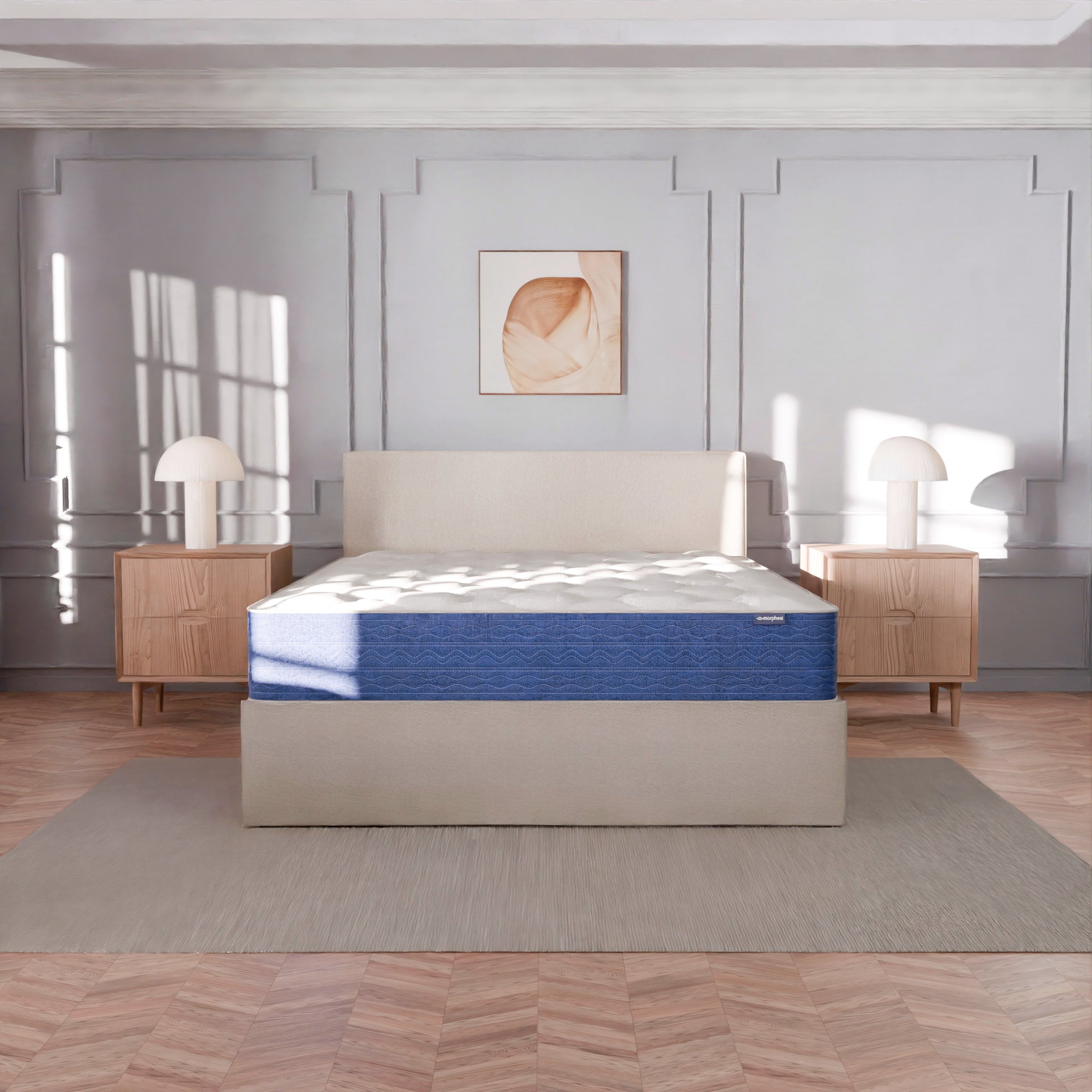

There's a point during pregnancy when sleep becomes unpredictable, difficult, or even...non-existent. One night you fall asleep quite well, the next you count the hours or even minutes of sleep.
The good news is that a mattress for pregnant women can truly make a difference. Not by promising miracles, but by doing exactly what it's supposed to do: relieve pressure points, support your spine, improve sleep independence, and offer you the comfort you deserve.
In this article, discover which types of mattresses to prioritize, what firmness to choose, what mattress thickness can relieve you, and how to spot a mattress adapted to your changing body.
Let's start by understanding what really changes during pregnancy, to understand why your bedding matters more than ever.
Browse Morphea's tips for choosing the best mattress for couples.
During pregnancy, your center of gravity changes, your pelvis adapts, and your back (especially the lumbar region) naturally compensates. First consequence? Your preferred sleeping position from before sometimes becomes uncomfortable, and you find yourself sleeping on your side more often.
Add to that the very real daily hassles: needing to move, feeling hot, wanting to pee, micro-awakenings... and sometimes a feeling of light, fragmented sleep, typical of sleep disorders in many expectant mothers.
The mattress doesn't do everything, of course. But it can save you from enduring, night after night, the pain of a "hard spot" under your hip or shoulder.
Here are the criteria to consider when choosing a good mattress for pregnant women, which will truly make a difference.
When sleeping on your side, your shoulder and hip bear most of the weight. A suitable mattress must distribute pressure well to prevent pain and micro-awakenings. Comfort layers that conform to your body shape (including memory foam) are often very effective at smoothing these pressure points, especially as sensitivity increases over the weeks.
Your spine must remain straight: no hammock effect (mattress too soft), and no board effect (too firm). The right balance is support that maintains and comfort that relaxes.
The firmness of a mattress is not just about "hard" or "soft." Good firmness during pregnancy means a stable and consistent sleeping surface: the comfort is pleasant, but the mattress prevents excessive sinking of the pelvis. You can turn over without struggling and feel reliable support, without the sensation of a hollow appearing during the night.
Moving during the night, getting up, turning over... A mattress with good motion isolation prevents waking your partner (and vice versa). Memory foam and pocket springs are very good on this point.
Pregnancy can sometimes be accompanied by night sweats and hot flashes. A breathable mattress prevents moisture accumulation and improves comfort. Hybrid mattresses (springs + foam layers) have a great advantage, as the springs allow air to circulate better within the core of the mattress.
The "cocoon" feeling also comes from contact with surface materials. Opt for breathable and hypoallergenic materials to better manage temperature and limit irritation. MORPHEA mattresses are designed with OEKO-TEX® Standard 100 certified fabrics and CertiPUR® certified foams, guaranteed free of harmful substances, which is more reassuring for sensitive skin.
Good thickness can improve support and limit sagging (especially if you are sensitive to hollows). At Morphea, models go up to 30 cm, with a more "hotel-like" feel, which is much appreciated when sleeping more on your side.
Let's explore the types of mattresses available on the market. The right choice will depend mainly on how you feel at night (pressure, heat, need to move) and your preferred sensations.
A memory foam mattress is often appreciated because it limits pressure points: the material conforms to better distribute your weight. If you experience shoulder or pelvic pain when sleeping on your side, memory foam can be a real relief.
Note: if you don't like the enveloping sensation, you can opt for more "reactive" memory foam (or a hybrid, which we'll get to).
Latex is suitable if you like a bouncier feel with good ventilation. If you move a lot or don't like the cocoon effect, this is an interesting option.
Pocket springs provide point-by-point support and very good motion isolation, while allowing air to circulate better within the core of the mattress.
A hybrid often combines springs + comfort layers (sometimes including memory foam): practical if you want support, comfort, and a less "enveloping" sensation.
The hybrid mattress is a combination of pocket springs and comfort layers (often in memory foam). It's an excellent choice if you want support, comfort, and a mattress adapted to your pregnancy.
As we know, as pregnancy progresses, sleeping on your side becomes natural, even necessary. Your mattress for pregnant women should therefore:
Simple tip for expectant mothers: placing a pillow between your knees greatly helps stabilize the pelvis. And if your belly "pulls" a bit, a small pillow under your belly can also soothe.
When you are pregnant, blood circulation can become an issue: heavy legs, tingling, discomfort.
Without getting into medical details, the idea for bedding is simple: avoid unnecessary compression, especially in the hips and shoulders, and promote a stable posture.
A mattress that reduces pressure points or tension and helps you stay well-aligned often means fewer awakenings to reposition yourself.
You might still be wondering: "Should I change the entire mattress now?" or can adding a mattress topper be enough?
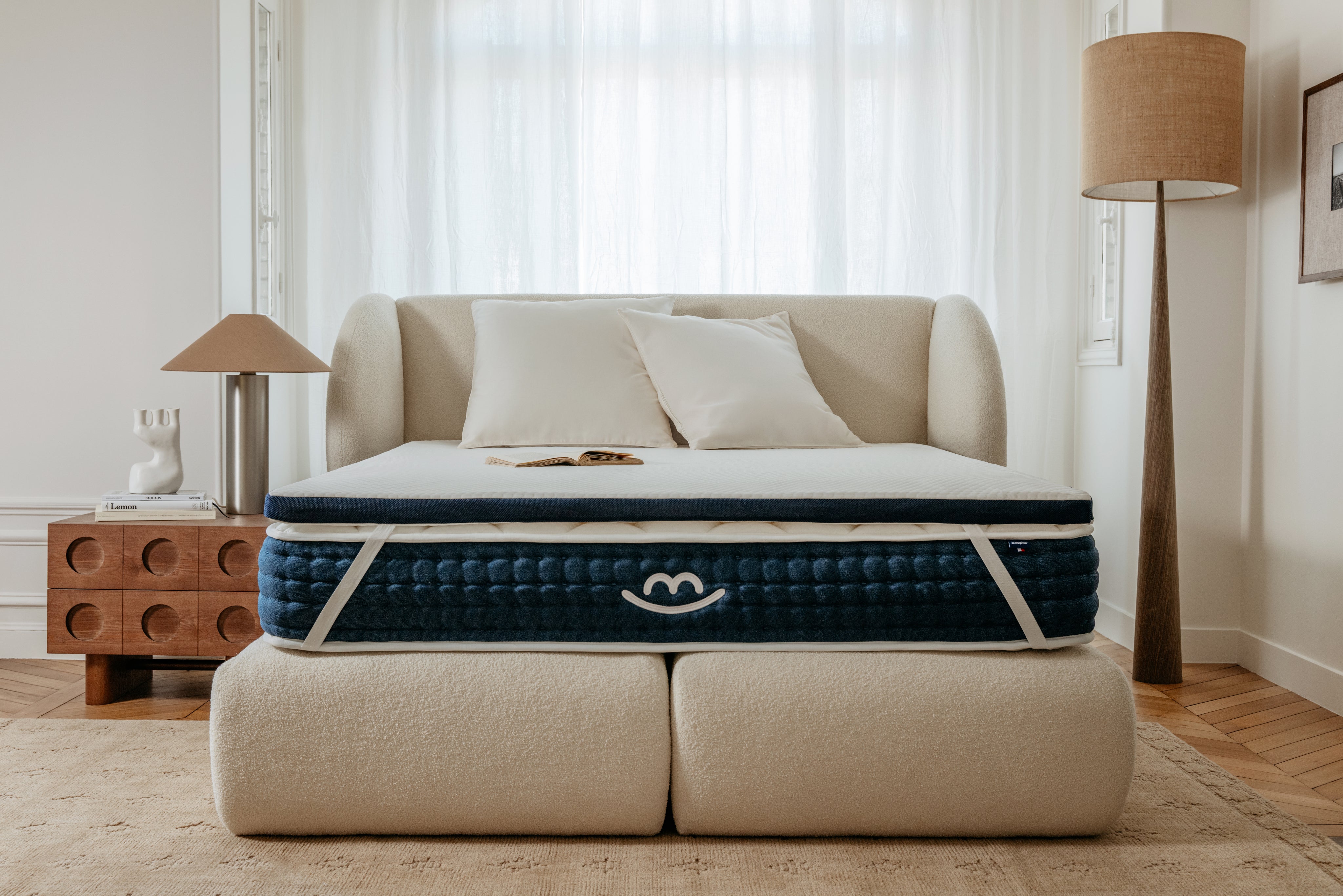
If your mattress is still in good condition but too firm, adding a mattress topper can be a solution. At MORPHEA, we recommend a thickness of around 4 to 6 cm to improve comfort.
However, if you feel a hollow in the mattress, have persistent pain, or a feeling of lack of support, changing the mattress is essential, and also more sustainable.
At Morphea, we design our mattresses like we design a comfort zone. A comfortable welcome as soon as you lie down, and stable support that helps your body relax, even when you sleep on your side and nights are more fragmented.
Our obsession is balance: limiting pressure points without sinking in, keeping the spine well-aligned, and offering true motion isolation when you move a lot (or when sleeping with a partner). This is also why hybrid makes sense: ventilation, stability, and comfort, without sacrificing the feel of the welcome.
And because a good choice is based on real nights, Morphea offers 100 night trial and 10 year warranty. Give yourself time to feel if your body truly relaxes, if awakenings decrease, and if you find your comfort zone again, even while pregnant.
If your nights become complicated, you are not "fussy," you are pregnant, and your body is doing immense work.
A good mattress for pregnant women relieves, supports, and helps you find more peaceful and restorative sleep.
Just imagine... lying down without apprehension, finding your position, feeling your hips relax, and falling asleep before the tenth attempt.
Keep the checklist handy, identify your priorities, and choose a mattress adapted to your nights of today and tomorrow.
The best mattress for pregnant women relieves pressure points when sleeping on your side and keeps the spine aligned. It should remain stable when you change sides and not retain heat. If you're looking for very enveloping comfort, the Victoria (30 cm luxury hybrid) is designed for a deep, ergonomic feel.
If you prefer a more dynamic and supportive feel, the Jade (26 cm premium hybrid) offers a firmer and more consistent support.
We mainly recommend a mattress that combines comfort and stable support. Memory foam is a good option for pain, as it distributes pressure more effectively.
The hybrid mattress is often the most popular choice during pregnancy. It offers stable support, facilitates movement, and provides premium comfort.
A thick mattress is recommended for pregnant women, as it allows for multiple complementary layers. At MORPHEA, our 25 cm mattresses offer precisely this "hotel-like" comfort, which is more generous, soft, and enveloping, without ever losing stability. Our models up to 30 cm are designed for lasting high-end comfort, particularly appreciated when sleeping on your side.
Yes, sleeping on your side is often the most comfortable position as your belly grows. Depending on the size of your belly, the left side is generally the most comfortable for sleeping and helps prevent vasovagal syncope. (Santé.fr)
The main thing is to find a side position that allows you to relax your hips and back. Simple adjustments are also recommended: a pillow under the stomach and/or under the knee to relieve the back.
As for bedding, the objective is clear: a mattress that limits pressure points (shoulder/hip) and stabilizes the pelvis to keep the spine aligned.
Best hybrid mattress: selection and comparison 2026 – Morphea

Memory Foam Mattress Topper: The Best Mattress Topper for Back Pain
A memory foam mattress topper is a simple and effective solution for relieving back pain. Thanks to its ability to conform to the body's curves, it perfectly aligns the spine, reduces pressure points, and improves nighttime comfort.
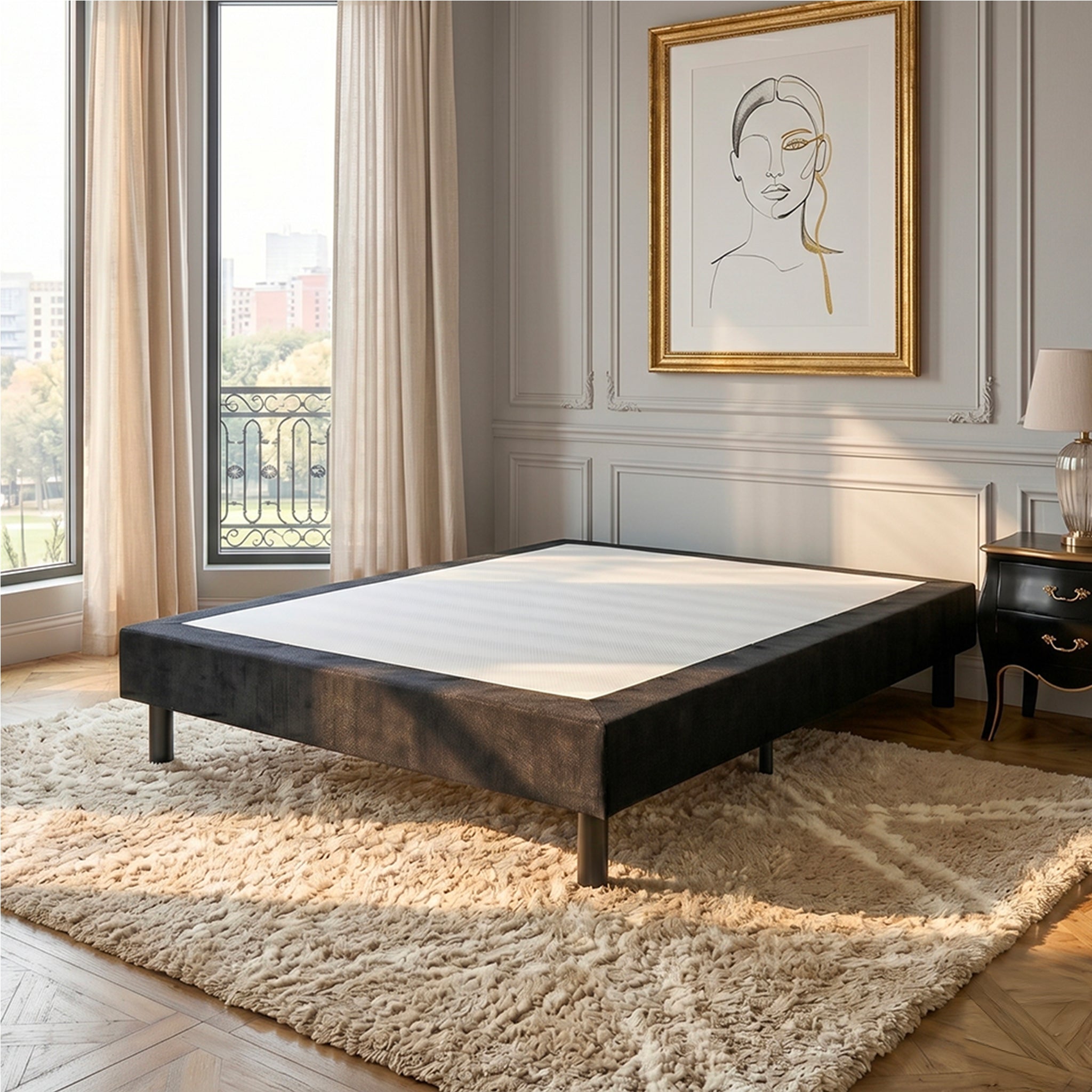
Which bed base to choose for a good night's sleep?
