

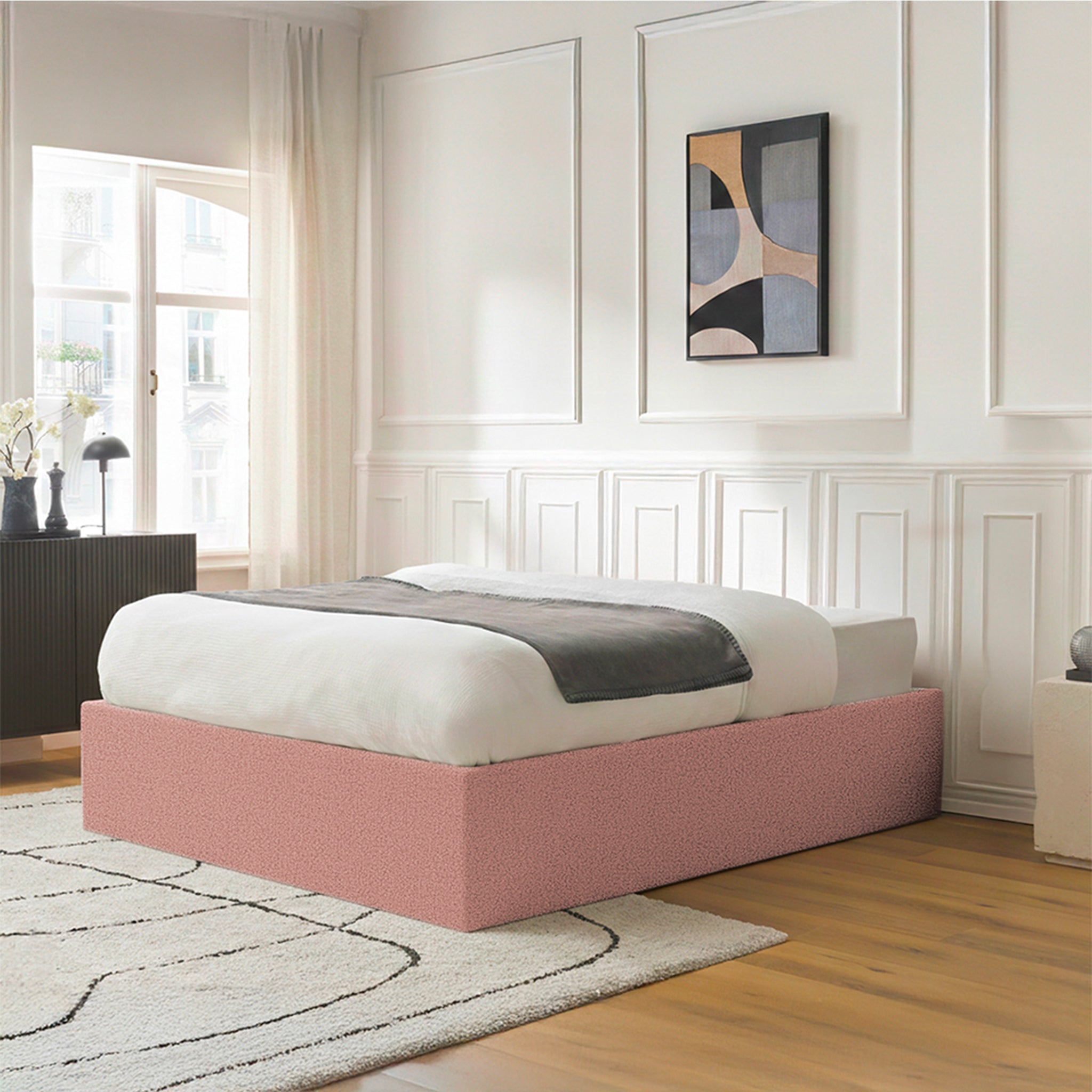
Sleeping close to the ground has a certain appeal, doesn't it? A minimalist vibe, a more streamlined room, and easy setup.
However, aesthetics are one thing. Good daily sleep is another. A comfortable and durable sleeping arrangement doesn't just depend on the mattress, but also on its environment. Humidity, ventilation, support, hygiene... all these elements matter.
So, is it really a good idea to sleep on a mattress on the floor? In some cases, yes. But not without some precautions.
Need more clarity? Check out our guide to choosing your mattress.
In summary
- Sleeping on a mattress on the floor can be suitable occasionally, but is less ideal for daily use.
- The main drawback comes from the absence of a bed frame, which alters mattress support and can compromise long-term comfort.
- If you sleep on the floor, choose a mattress with good support and breathability.
- To make your bedding last, it's best to add a breathable support (like a slatted bed base) under the mattress.
Why is a floor mattress so appealing?
It's no coincidence that a floor mattress is so appealing. It evokes a simpler, more streamlined, almost more calming lifestyle. Visually, it lightens the room. It can also give a cocoon-like impression, which is highly sought after in a space dedicated to rest.
It's also an option that seems economical. When you want to equip yourself quickly, postponing the purchase of a bed frame might seem clever. Finally, some people simply appreciate the feeling of sleeping closer to the ground, with a more intimate and unconventional environment.
On paper, the idea seems perfect. But to sleep well on a mattress, you need to look beyond the decorative effect.
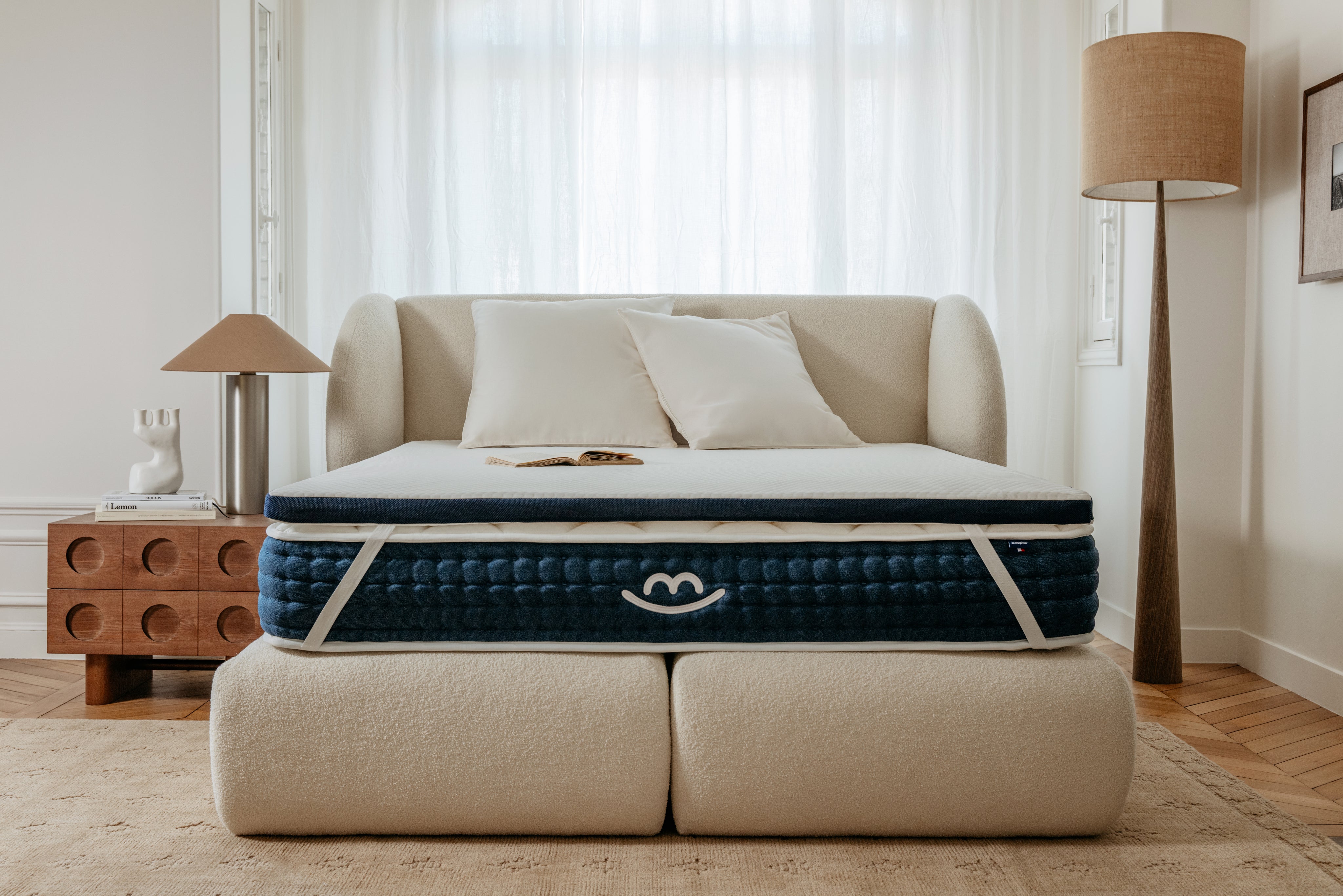
Main disadvantages of a mattress placed on the floor
Reduced support
A mattress is designed to work with a slatted base. Placed directly on the floor, it no longer functions under the same conditions. Over time, this can accelerate the loss of firmness and impair comfort, especially for a hybrid mattress or memory foam mattress.
Humidity and mold
Every night, your body releases heat and perspiration. Without air circulation under the mattress, moisture stagnates. Mold can appear in a few weeks, especially on a cold floor.
Dust and allergens
Sleeping directly on the floor means you're sleeping where dust accumulates the most. For people with allergies, constant contact with the floor increases exposure to dust mites.
Getting up becomes an effort
Sleeping close to the ground makes getting in and out of bed more difficult. For people with back pain, pregnant women, or older people, this is a real daily obstacle.
Finally, a mattress placed on the floor tends to wear out faster if it remains in poor conditions. A good mattress is designed to accompany your nights for years. Placing it directly on the floor, without precaution, is not always the best way to preserve its qualities of support and comfort.
What is the best mattress for sleeping on the floor?
If you plan to place your mattress directly on the floor, choose a model that can offer good support while allowing the bedding to breathe. The idea is not to choose the thickest mattress possible, but to find a balance between comfort, support, and ventilation.
In our range, the JADE model is a very good choice if you like firm and tonic support. The MILA mattress can also be a good option if you are looking for a more affordable model, with balanced comfort.
In short, on the floor, it's best to avoid a mattress that's too stifling and opt for a well-ventilated hybrid model.
When can a mattress on the floor work?
- As a temporary solution for a few nights, it can work very well. This is often the case when moving, staying with relatives, or waiting for new bedding.
- As an occasional extra bed, it is also an acceptable option. Provided, of course, that it doesn't become a habit.
- For a young child in a Montessori setting, a floor bed can be suitable. It promotes autonomy and allows the child to get in and out of bed more easily. In this context, its use is not designed in the same way as for an adult.
However, for an adult on a daily basis, we do not recommend it. The mattress breathes less well. Moisture can settle more easily. And in the long run, neither your comfort nor your bedding will benefit.
Good habits to adopt if you sleep on the floor
If you already sleep on the floor, it is best to immediately adopt good habits to maintain your mattress and limit humidity on a daily basis.
- Air out your mattress every day. Lean it against a wall, remove the sheets, and let the air circulate for at least 30 minutes.
- Place an insulating barrier underneath. A tatami mat or a thick natural fiber rug will protect your bedding from cold and humidity.
- Choose a mattress at least 20 cm thick to maintain good spinal support, even without a bed base.
- Use a breathable mattress protector to limit the penetration of moisture and dust.
The final word
A mattress on the floor has charm. But what is visually appealing is not always enough to guarantee a good night's sleep. In the long run, sleeping well requires more than just a mattress on the floor: it also needs adequate support, good ventilation, and a support designed to accompany the body night after night.
At Morphea, we believe that a beautiful bed and a good night's sleep go hand in hand. Our mattresses offer generous thicknesses, quality European materials, and 100 nights of trial to be sure of your choice.
Because your sleep deserves a true comfort zone.
FAQ
Is it really good to sleep on a mattress on the floor?
Sleeping on a mattress on the floor is not necessarily a problem... as long as it's temporary. For a few nights or a short period, it can be a good temporary solution. However, for everyday use, it's not the solution we recommend. Without a bed base, the mattress ventilates less effectively. And when air circulation is poor, moisture can build up more easily.
Which mattress to choose for sleeping on the floor?
For sleeping on the floor, we recommend choosing a mattress with good support and a breathable structure. The goal is to find a mattress that maintains a good balance between comfort, support, and air circulation. If the room is a bit humid or poorly ventilated, this criterion becomes even more important. In short, it's best to avoid a mattress that's too stifling and opt for a well-designed mattress that can remain comfortable without trapping heat or humidity.
What are the disadvantages of sleeping on a floor bed?
The main drawback is the lack of ventilation under the mattress. Not only does this cause humidity, but it also exposes the bedding to dust. In the long term, this can affect comfort, bedding hygiene, and its lifespan. In other words, a mattress on the floor can be suitable as a temporary fix, but not for the long term.
Our latest articles to discover
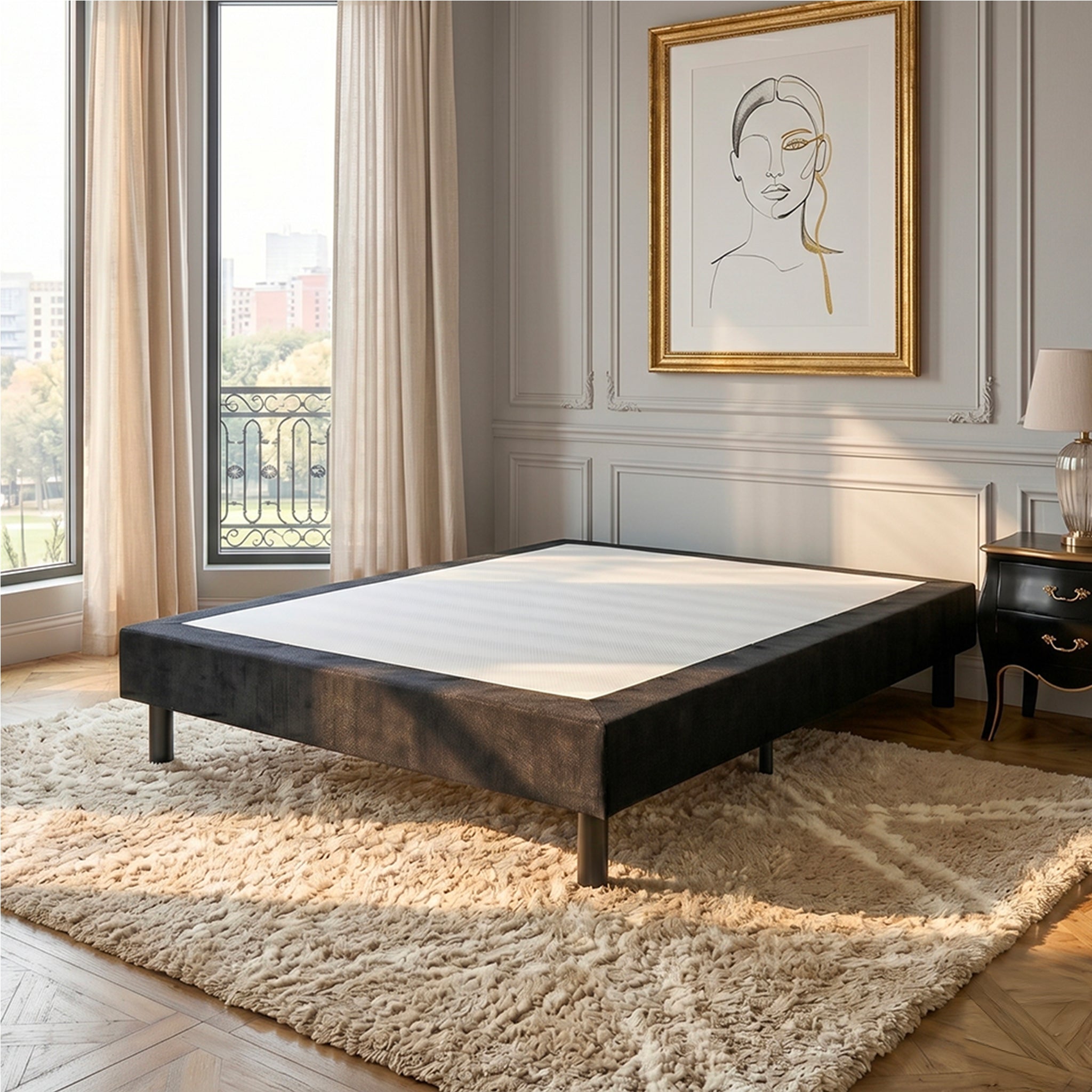
Which bed base to choose for a good night's sleep?
Mattress too hard: what can you do to sleep better?
Latex and memory foam mattresses: which one to choose?
