

You may have heard that you should flip your mattress twice a year. But is that really true for all models? It's not that simple. Flipping a memory foam mattress, for example, can even damage it.
In this article, we'll clearly explain what you should (or shouldn't) do depending on your type of mattress. Which models can be flipped? Should you rotate it instead? And how often should you do it?
In just a few minutes of reading, you'll have a clear and concrete answer to maintain optimal comfort, night after night. Let's get started.
To go further, find all our practical advice in our dedicated guide: maintaining your mattress, our 10 tips for making it last.
In summary
- Not all mattresses can be flipped. Foam, memory foam, and hybrid models are designed with one side: flipping them degrades their comfort. Only head-to-toe rotation is suitable.
- Reversible mattresses exist, but they are the exception. If your model has a summer side and a winter side, flip it at each change of season, up to 4 times a year.
- Rotating is the universal gesture. For all types of mattresses, a head-to-toe rotation every 3 to 6 months is enough to prevent premature sagging and preserve your sleep quality.
- The first 3 months are crucial. During the break-in period, a monthly rotation allows the materials to adapt uniformly to your body shape.
Which mattresses can be flipped?
Foam and memory foam mattresses
A foam mattress, especially a memory foam mattress, is designed with a specific upward-facing side. The top layer is formed to adapt to your body shape. Flipping a memory foam mattress would mean sleeping on the wrong side, which would be less comfortable and less conforming.
The best practice here: do not flip, but rotate. We’ll come back to that in a moment.
Pocket spring and hybrid mattresses
The majority of pocket spring mattresses and hybrid mattresses sold today are single-sided. They are constructed with technical layers in a precise order: flipping them would offer no benefit.
For these models, head-to-toe rotation is sufficient. It helps to balance wear and tear and maintain comfort and support in the long term, without risking damage to the structure.
Always consult your mattress manual to find out if it is reversible. This is the most reliable reference.
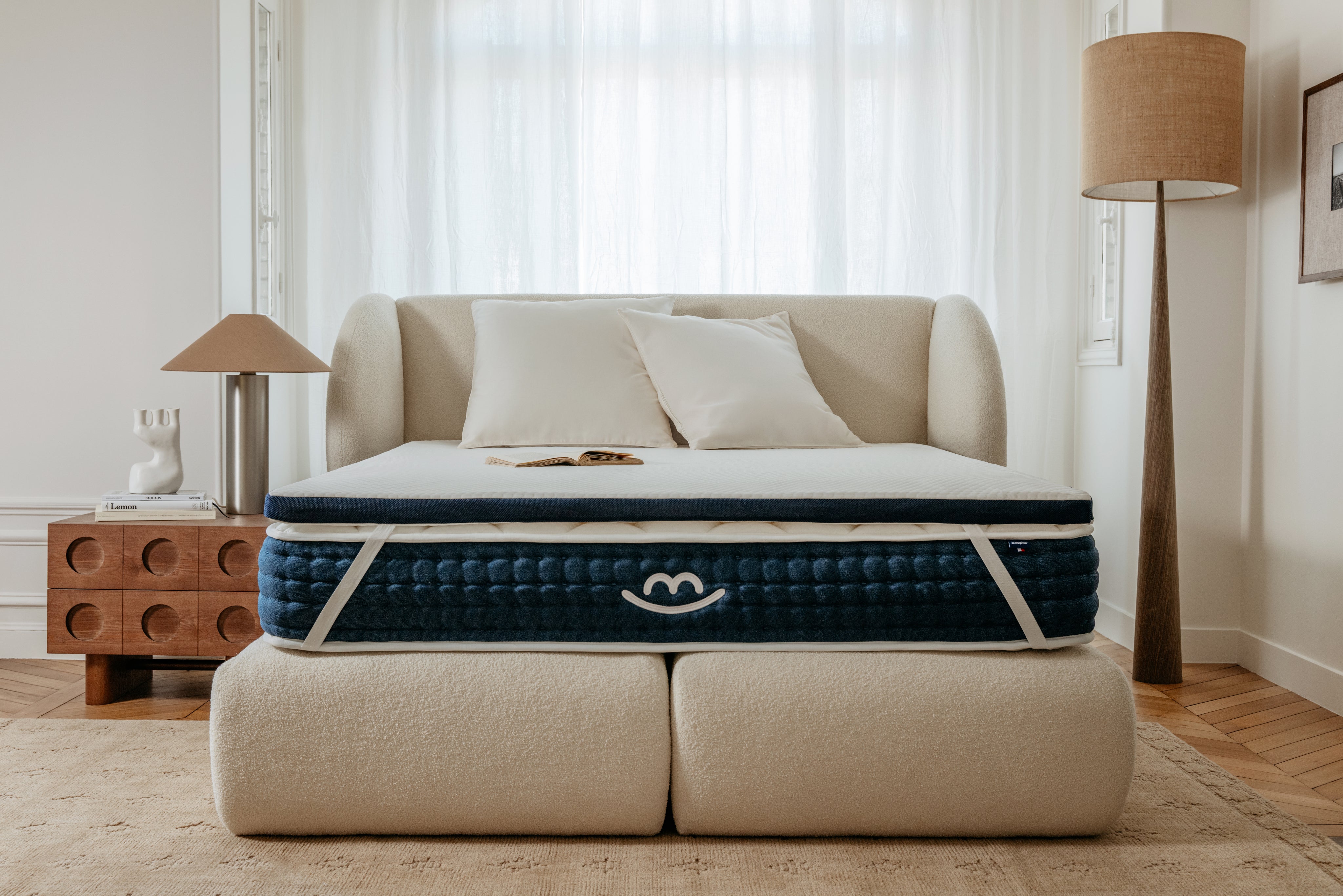
At Morphea, there’s no need to flip your mattress. Thanks to their hybrid design combining springs and foam, our models are designed to be used on one side only. To maintain their comfort and distribute wear evenly, simply rotate them 180° every 3 to 6 months.
Reversible mattresses with summer and winter sides
Some models offer a summer side (cooler, more breathable) and a winter side (more conforming). In this specific case, flipping the mattress with each change of season is not only possible but recommended. It is even one of the reasons for this type of mattress.
If your mattress has a side adapted to each season, take advantage of it: it's a real plus for your sleep quality throughout the year.
Flip or rotate? The nuance that changes everything
Many people confuse two very distinct actions. Flipping the mattress (turning it upside down) is not the same as rotating the mattress (head-to-toe rotation).
To rotate means to turn your mattress 180° flat, without flipping it over. The area where your head rests ends up at the foot of the bed, and vice versa. This simple action is sufficient for the majority of modern mattresses. It prevents the same area from being constantly compressed, without risking damage to the technical layers.
If your mattress should not be flipped (memory foam, spring, hybrid), head-to-toe rotation is your best ally.
How often should you flip your mattress?
For regular rotation, here's what is generally recommended:
During the first 3 months, rotate your mattress once a month. This is the break-in period, during which the materials adapt to your weight and posture.
After that, a rotation every 3 to 6 months is sufficient. Coupled with good maintenance, it helps to extend the lifespan of your bedding in the long term and maintain a quality night's sleep.
Conclusion
Flip your mattress? It all depends on the model you have. Foam, pocket springs, reversible: each type of mattress has its own rules.
What doesn't change is the importance of taking care of it regularly to preserve your comfort night after night.
FAQ
Is it good to flip your mattress?
Yes, provided your mattress allows it. For reversible models, flipping your mattress regularly prevents the same areas from always bearing the same pressure. It's a simple step that preserves comfort and support in the long term. For other models, it's better to stick to a head-to-foot rotation.
How do I know if I can return my mattress?
Start by checking the label or tag on your mattress. Most manufacturers clearly state whether the model is reversible. If there's no information, examine both sides: if one is significantly more technical or padded than the other, it's designed to be in contact with your body. Don't flip it over.
Which mattresses don't need to be flipped?
Foam mattresses, memory foam mattresses, and most modern hybrid mattresses are not flippable. They are constructed with layers designed in a specific order, from support at the bottom to comfort at the surface. Flipping them degrades their effectiveness and, consequently, your night's sleep.
How to flip a mattress easily?
As a pair, it's always easier, especially for large items like a double mattress. Clear the space around the bed, remove sheets and mattress protector, then tip the mattress onto its side before laying it on the other side. For a simple head/foot rotation, just slide it flat without lifting it.
Can I return a mattress if it's uncomfortable?
If your mattress is flippable, yes, it's worth a try. Flipping it can redistribute wear and tear and improve the feel. However, if your mattress is made of foam or memory foam, flipping it will only worsen the discomfort. In any case, if the discomfort persists after several nights, consider the age and general condition of your bedding.
Is it better to flip or rotate a mattress?
It all depends on your mattress model. For a reversible mattress, both actions are complementary: flipping it changes the side used, and rotating it head-to-toe shifts the pressure points. For a non-reversible mattress (foam, memory foam), only head-to-toe rotation is suitable. If in doubt, rotate it: it's the universal action, valid for all types of mattresses.
Our latest articles to discover

Best hybrid mattress: selection and comparison 2026 – Morphea

Memory Foam Mattress Topper: The Best Mattress Topper for Back Pain
A memory foam mattress topper is a simple and effective solution for relieving back pain. Thanks to its ability to conform to the body's curves, it perfectly aligns the spine, reduces pressure points, and improves nighttime comfort.

Which bed base to choose for a good night's sleep?
